Buffer and Taplio are often mentioned in the same sentence, but they're not really alternatives. Buffer is a multi-platform social scheduler that happens to support LinkedIn. Taplio is a LinkedIn-specific growth platform. Choosing between them is mostly a question of what kind of LinkedIn user you are.
Here's the honest comparison, and where Postiv AI fits as a LinkedIn-first third option that solves the gaps both leave open.
TL;DR: Buffer vs Taplio at a Glance
| Feature | Buffer | Taplio | Postiv AI |
|---|---|---|---|
| Built for | Multi-platform | LinkedIn-specific | LinkedIn-specific |
| Starting price | $5/mo per channel (billed yearly) | $39/mo (Starter) | Lower than Taplio Pro |
| AI writing | ⚠️ Basic generic | ✅ Strong on Growth $69 | ✅ Brand-trained, tier 1 |
| LinkedIn-native AI | ❌ No | ✅ Yes | ✅ Yes |
| Carousel builder | ❌ None | ⚠️ Basic, gated | ✅ Full workflow |
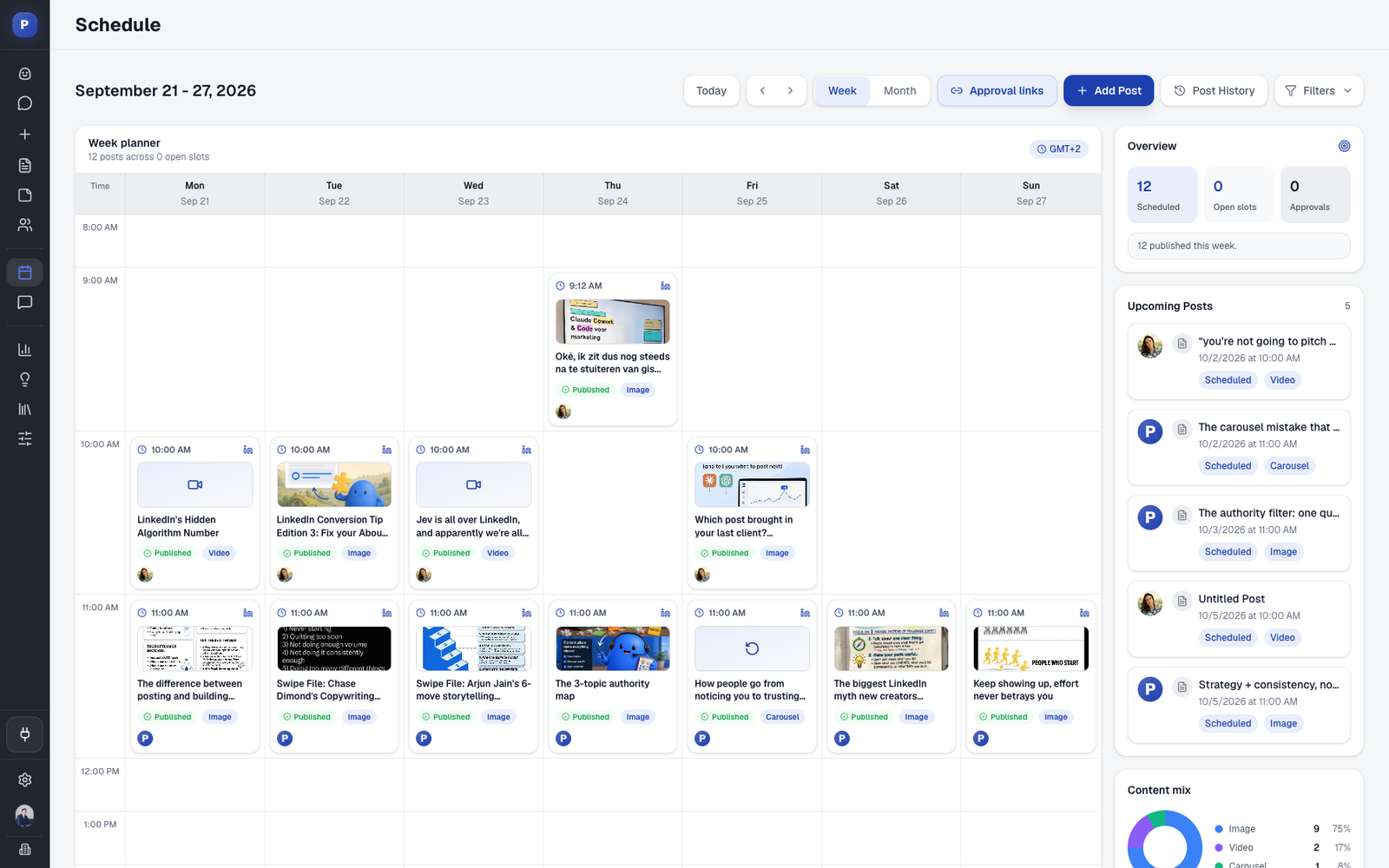
| Scheduling | ✅ Strong | ✅ Strong | ✅ Strong |
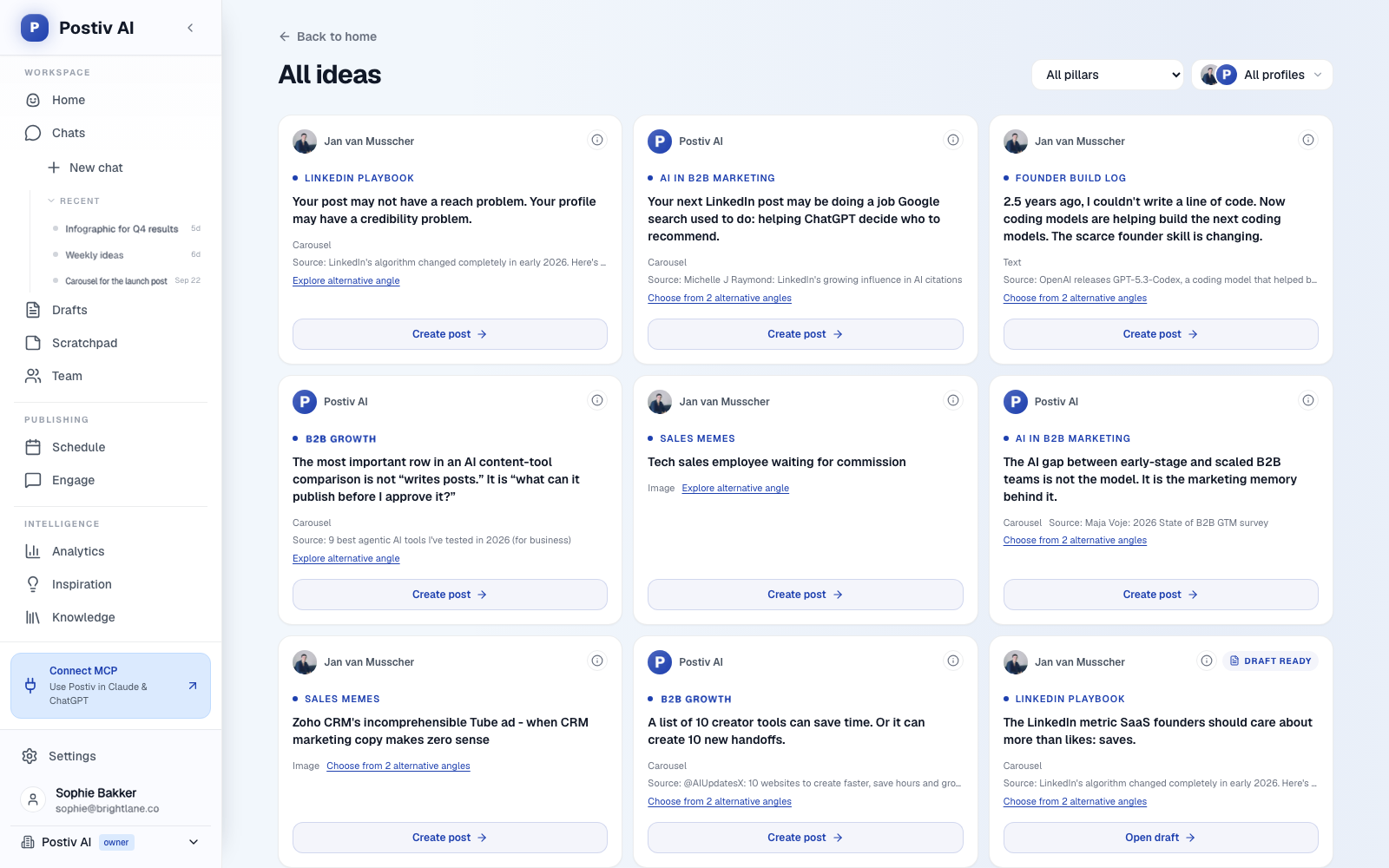
| Content research | ❌ No | ✅ Yes | ✅ Yes |
| Lead generation | ❌ No | ✅ Yes | ❌ No |
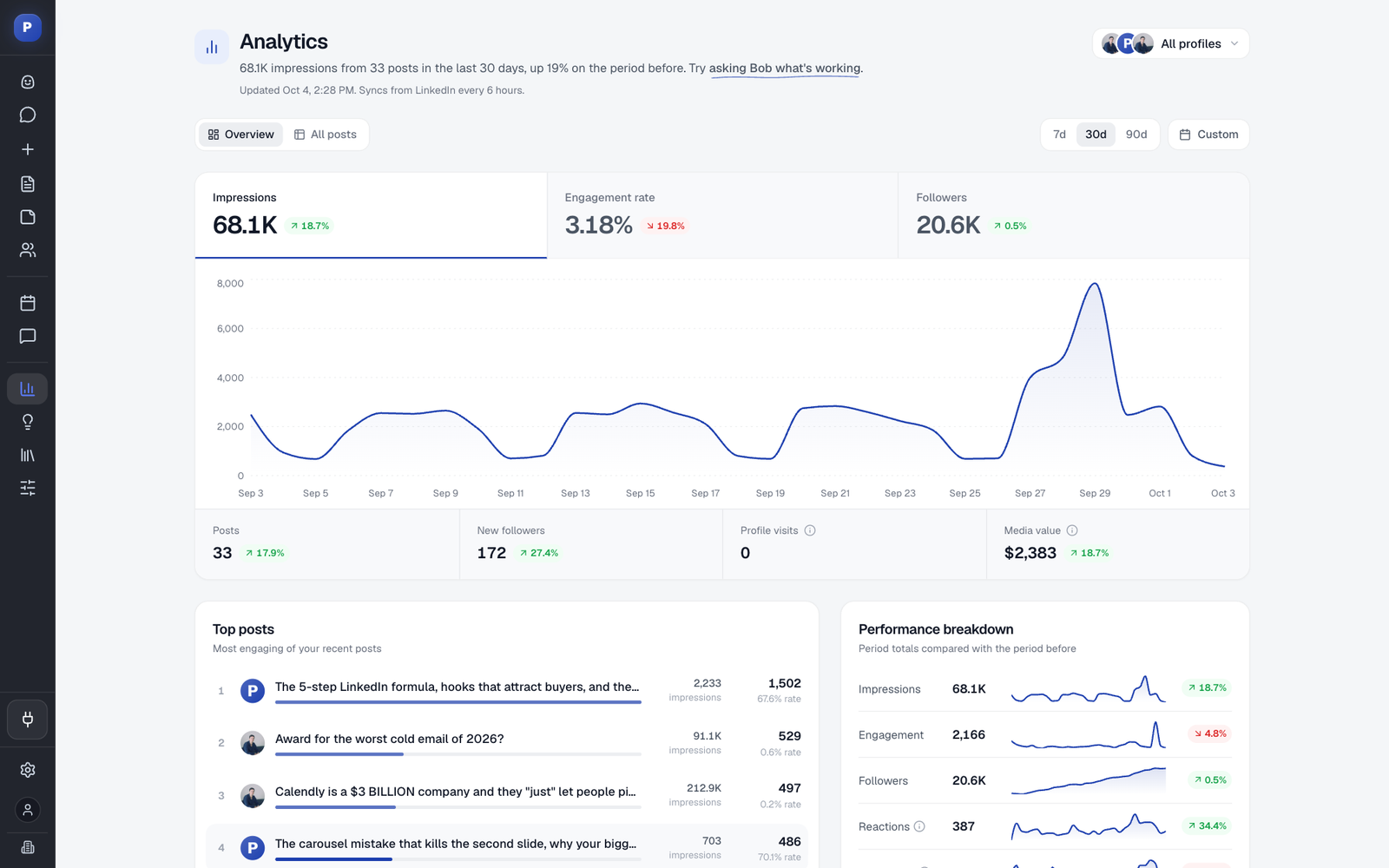
| Personal LinkedIn analytics | ⚠️ Basic | ✅ Strong | ✅ Strong |
| Multi-account / agency | Team plan | Limited | ✅ Full client workspaces |
| LinkedIn API safety | ✅ OAuth | ✅ OAuth | ✅ OAuth |
Quick verdict: Pick Buffer if you post to multiple platforms and budget is tight. Pick Taplio if LinkedIn is your primary platform and AI writing matters. Pick Postiv AI if LinkedIn is everything and you want brand-trained AI plus real carousels.
Buffer in 2026: Multi-Platform Scheduler
Buffer is one of the original social media schedulers, founded in 2010. It supports LinkedIn, Twitter (X), Instagram, Facebook, Pinterest, TikTok, Mastodon, and Bluesky. The pricing model is per-channel, which keeps entry costs low if you only post to one platform.
Buffer strengths:
- Cheap entry at $5/month for one channel
- Reliable, mature scheduling
- Multi-platform from one dashboard
- Generic AI assistant on paid plans
- Browser extension for quick adds
- Free tier for up to 3 channels with limits
Buffer weaknesses:
- No LinkedIn-specific features (no carousels, no LinkedIn-trained AI)
- AI assistant is generic, not LinkedIn-aware
- Per-channel pricing adds up quickly for multi-platform users
- Analytics are general-purpose, not deep on LinkedIn
- No content research or inspiration feeds
For more, see our Buffer alternatives guide.
Taplio in 2026: LinkedIn-Specific Growth Platform
Taplio is purpose-built for LinkedIn. AI writing, scheduling, lead generation, content research, and analytics are all LinkedIn-tuned. The pricing is much higher than Buffer because the feature set is deeper for one platform.
Taplio strengths:
- AI writing trained on viral LinkedIn content (Growth $69/mo)
- Content inspiration feeds and creator research
- Lead generation tools. Find and engage your ICP.
- Strong LinkedIn analytics
- Mature scheduling with content calendar
Taplio weaknesses:
- Real AI gated to Growth at $69/month
- Basic carousel builder
- AI output reads formulaic without editing
- Expensive for solo creators
- Limited multi-client / agency support
See Taplio alternatives in 2026 for the full breakdown.
Pricing: Buffer vs Taplio
| Plan | Buffer | Taplio | Postiv AI |
|---|---|---|---|
| Trial | Free tier (3 channels) | 7-day | Free trial with full features |
| LinkedIn-only entry | $5/mo billed yearly (1 channel) | $39/mo (Starter) | Lower than Taplio Pro |
| Real AI tier | Paid plans (basic) | Growth $69/mo | Tier 1 |
| Carousels | Not available | Growth+ | Tier 1 |
| Multi-account | $10/mo per channel (Team, billed yearly) | Limited | Full agency support |
The headline cost difference is enormous: $5 vs $69 (for the AI tier). But you're paying for completely different things. Buffer at $5 schedules one LinkedIn channel and gives you a generic AI assistant. Taplio Growth at $69 gives you LinkedIn-specific AI, content research, and analytics.
The right comparison isn't "which is cheaper". It's "which fits your usage." For Taplio's current plans, credits and trial terms in detail, read how much Taplio costs in 2026.
What Each Tool Is Actually Best At
Buffer is best at:
- Scheduling across multiple platforms from one dashboard
- Low-cost entry for casual or multi-platform users
- Simple, reliable workflows
- Team collaboration on the Team plan
Taplio is best at:
- LinkedIn-specific AI content generation
- Content research and creator inspiration
- LinkedIn lead generation and ICP targeting
- Deep LinkedIn analytics
The two tools rarely compete. They serve different users. Multi-platform marketers pick Buffer. LinkedIn-first creators pick Taplio.
AI Writing: Taplio Wins by a Wide Margin (for LinkedIn)
If LinkedIn is your focus, AI writing quality matters.
- Buffer: Generic AI assistant, not LinkedIn-trained. Produces shorter, more general outputs. Useful as a "get me unstuck" tool.
- Taplio Growth/Pro: Trained on viral LinkedIn content. Strong hooks, scannable structure, LinkedIn-native voice, though formulaic without editing.
- Postiv AI: Brand-trained AI that learns your voice from your existing posts. Sounds like you specifically, not "average LinkedIn voice."
For LinkedIn-first creators, Buffer's AI is a footnote. Taplio Pro and Postiv AI are real tools.
Carousels: Buffer Has None, Taplio Has Some, Postiv Has the Workflow
LinkedIn carousels consistently outperform text posts in 2026. Buffer skips them entirely. Taplio includes a basic builder.
- Buffer: No carousel builder. You design in Canva, export, upload manually.
- Taplio: Basic carousel builder gated to higher plans. Limited templates and brand controls.
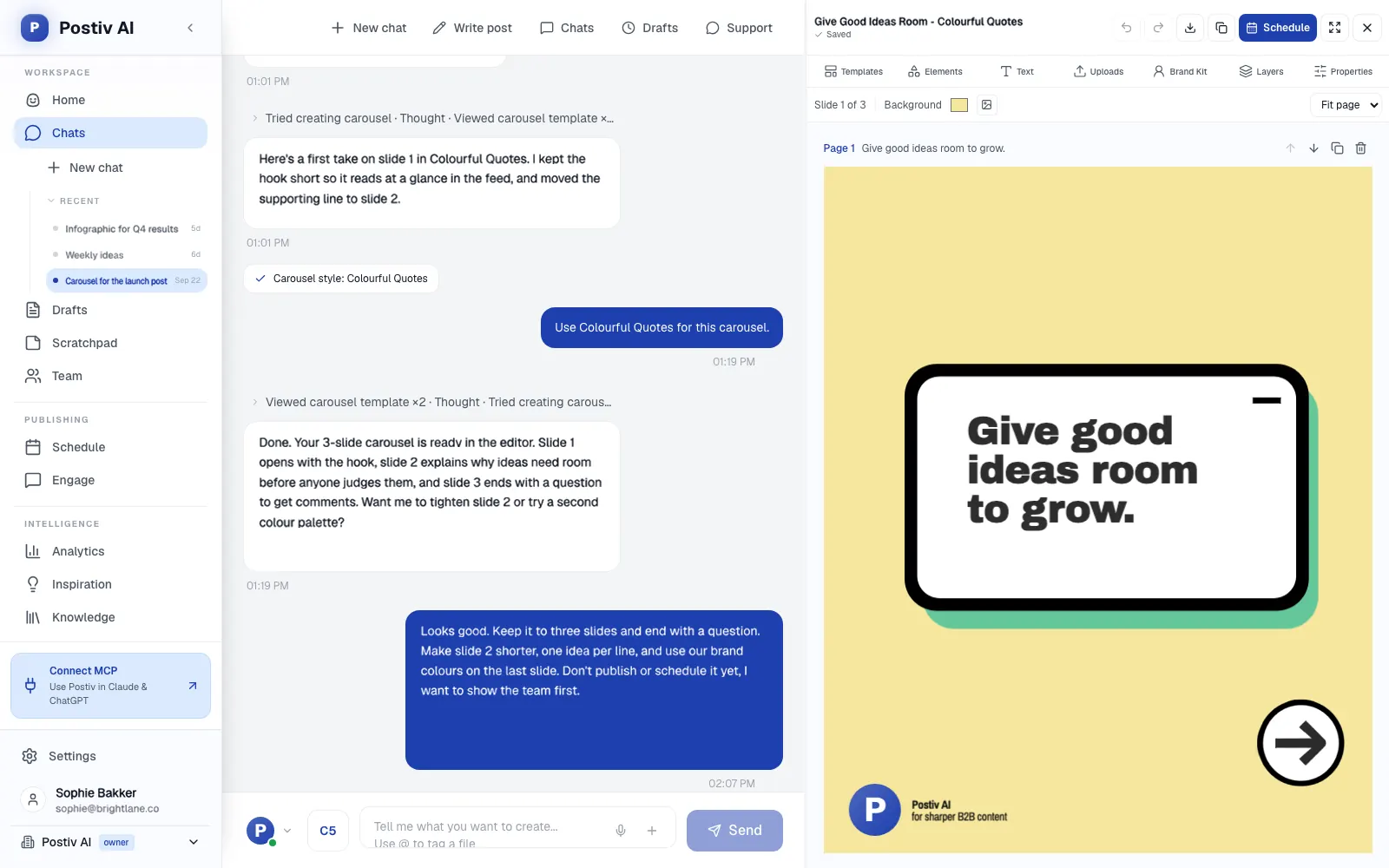
- Postiv AI: Built around carousels. Brand-aware templates, AI text-to-slide conversion, brand asset library, schedule from the editor.
If carousels are part of your strategy, this is one of the deciding factors.
Scheduling: Both Are Solid, Different Strengths
| Capability | Buffer | Taplio | Postiv AI |
|---|---|---|---|
| Native scheduling | ✅ | ✅ | ✅ |
| Best-time suggestions | ✅ | ✅ | ✅ |
| Multi-platform | ✅ | LinkedIn only | LinkedIn-focused |
| Queue management | ✅ Mature | ✅ | ✅ |
| LinkedIn Page support | ✅ | ✅ | ✅ |
| Multi-account | Team plan | Limited | Full agency support |
Buffer is the clear winner if you post to multiple platforms. Taplio and Postiv AI are LinkedIn-first.
Content Research and Lead Generation
This is where Buffer falls behind for serious LinkedIn growth.
- Buffer: No content research, no creator analysis, no lead gen
- Taplio: Strong content inspiration feeds, creator analysis, lead gen on Pro+
- Postiv AI: Content research and brand-trained AI; no lead generation
If you treat LinkedIn as a growth channel rather than just a posting destination, Buffer's missing layer is significant.
Choose Buffer If…
- You post to multiple social platforms, not just LinkedIn
- Budget is the top priority
- You're a casual LinkedIn user
- You don't need AI writing or content research
- You want multi-platform scheduling from one tool
Choose Taplio If…
- LinkedIn is your primary platform
- You want LinkedIn-trained AI writing
- Lead generation is part of your strategy
- You can afford $69/month for Growth (or $199 for Pro)
- You're a solo creator (not an agency)
Choose Postiv AI If…
- LinkedIn is your primary or only platform
- You want brand-trained AI that sounds like you
- Carousels are core to your content
- You manage multiple LinkedIn accounts (clients, brand pages)
- You don't want to pay Taplio Pro pricing
What Most Creators Actually Choose
Three patterns I see in 2026:
- Multi-platform marketers: Buffer + Canva (around $20/month combined). Works fine if LinkedIn is just one of several channels.
- LinkedIn-first solos: Taplio Growth ($69). Strong choice if budget allows and lead gen is part of your strategy.
- Serious LinkedIn creators / agencies: Postiv AI. Brand-trained AI, real carousels, multi-client workspaces, no juggling between tools.
If you're weighing Buffer vs Taplio specifically for LinkedIn, the honest answer is that neither is built for the workflow most LinkedIn creators actually need in 2026. That's the gap Postiv fills. If Taplio is the side you're leaning toward, our breakdown of the best Taplio alternatives in 2026 compares it directly against Supergrow, AuthoredUp, Kleo, and Postiv AI on pricing, carousels, and account safety.
Related Reading
Frequently Asked Questions
Is Buffer or Taplio better for LinkedIn in 2026?
Taplio is built specifically for LinkedIn growth, with AI writing, lead generation, and analytics tailored to the platform. Buffer is a multi-platform scheduler that handles LinkedIn alongside other social networks but doesn't include LinkedIn-native AI or content research. For LinkedIn-first creators, Taplio is the better fit. For multi-channel teams that post to LinkedIn alongside Twitter and Instagram, Buffer is simpler. Postiv AI is a third option built specifically for LinkedIn with brand-trained AI and carousels that beats both.
How much does Buffer cost vs Taplio?
Buffer starts at $5/month per channel on the Essentials plan, billed yearly ($6/month billed monthly). With LinkedIn alone that's $5/month, plus an additional $5 per channel for other platforms. Taplio Starter is $39/month, Growth is $69/month, and Pro is $199/month. Buffer is dramatically cheaper but covers far less of the LinkedIn growth workflow.
Does Buffer have AI writing for LinkedIn?
Buffer includes a basic AI assistant on paid plans. It's a generic writing helper, not LinkedIn-trained, and produces shorter outputs than Taplio's Pro AI. If AI writing is central to your workflow, Buffer's is a fallback rather than a primary tool. Taplio Pro and Postiv AI offer significantly stronger AI writing.
Can I create LinkedIn carousels with Buffer or Taplio?
Buffer does not have a carousel builder. Taplio has a basic carousel builder on higher plans, but the templates are limited and brand controls are weak. For real carousel design, Postiv AI offers a complete workflow with brand-aware templates, AI text-to-slide conversion, and a brand asset library that neither tool matches.
Is Buffer good for LinkedIn-only creators?
Buffer is fine for scheduling LinkedIn posts but doesn't include LinkedIn-specific features like content research, AI trained on LinkedIn patterns, or audience analytics. LinkedIn-only creators typically outgrow Buffer quickly. Taplio or Postiv AI both serve LinkedIn-first users better.
Should I use Buffer for multi-platform posting or Taplio for LinkedIn?
If you post to multiple platforms (LinkedIn, Twitter, Instagram, Facebook), Buffer's strength is the unified scheduler at low cost. If LinkedIn is your primary or only platform, Taplio's LinkedIn-specific features are worth the higher price. Postiv AI is built for LinkedIn-first creators who want AI, carousels, and scheduling without juggling tools.
Is Taplio worth it over Buffer for solo creators?
For LinkedIn-only solo creators who want AI writing, content research, and lead generation, Taplio Growth at $69/month is worth the premium over Buffer's $5/month. For creators who mainly need multi-platform scheduling and don't depend on AI features, Buffer is the better value. Postiv AI is a middle ground for LinkedIn-only creators who want Taplio's depth without Pro pricing.
Does Buffer support multiple LinkedIn accounts?
Buffer supports multiple LinkedIn accounts on the Team plan ($10/month per channel billed yearly). Taplio added basic team features but lacks proper multi-client workspaces. For agencies managing many LinkedIn accounts, Postiv AI offers full client workspaces with brand isolation, team roles, and approval workflows.
Which has better LinkedIn analytics, Buffer or Taplio?
Taplio has stronger LinkedIn-specific analytics including post performance, audience growth, ICP fit, and comparison to other creators. Buffer's analytics are general-purpose and shallower for LinkedIn specifically. If LinkedIn analytics matter, Taplio or Postiv AI is the better choice.
Is there a tool better than Buffer and Taplio for LinkedIn?
For LinkedIn-first creators, Postiv AI covers what both Buffer and Taplio do (AI writing, scheduling, analytics) plus a real carousel workflow and agency multi-client features. It's purpose-built for LinkedIn rather than retrofitted from a multi-platform tool, and includes brand-trained AI that learns your voice.