So, you're trying to figure out the best time to post on LinkedIn? The short answer is pretty straightforward: post when people are working. The data consistently points to mid-mornings, lunch breaks, and late afternoons on weekdays as the sweet spots for getting your content in front of professionals when they're most active.
Your Quick Guide to Peak LinkedIn Posting Times
Think of LinkedIn like a massive, ongoing industry conference. You wouldn’t walk onto the main stage to give your big presentation to an empty auditorium, would you? The same logic applies here. Posting at the right time is all about showing up when your audience is actually in their seats, paying attention, and ready to listen.
This initial timing is more important than you might think. It heavily influences how your post performs in the "golden hour"—that critical first 60-90 minutes after you hit publish. A strong start tells the LinkedIn algorithm that people find your content valuable, which can give it a massive boost in visibility long after that first hour is up.
The Logic Behind Business Hour Engagement
Why do business hours work so well? It all boils down to simple human behavior and daily routines. Professionals hop on LinkedIn as they're settling in for the day with their morning coffee, scrolling through their feed during a lunch break, or catching up on industry chatter as their workday wraps up.
These are the natural lulls in a busy schedule, the moments when people switch from doing the work to connecting with the people and ideas in their professional world.
LinkedIn’s entire ecosystem moves to the rhythm of the professional workday. The easiest and most effective first step you can take is to sync your posting schedule with these established patterns.
This is a great visual breakdown of those key engagement windows throughout a typical day.
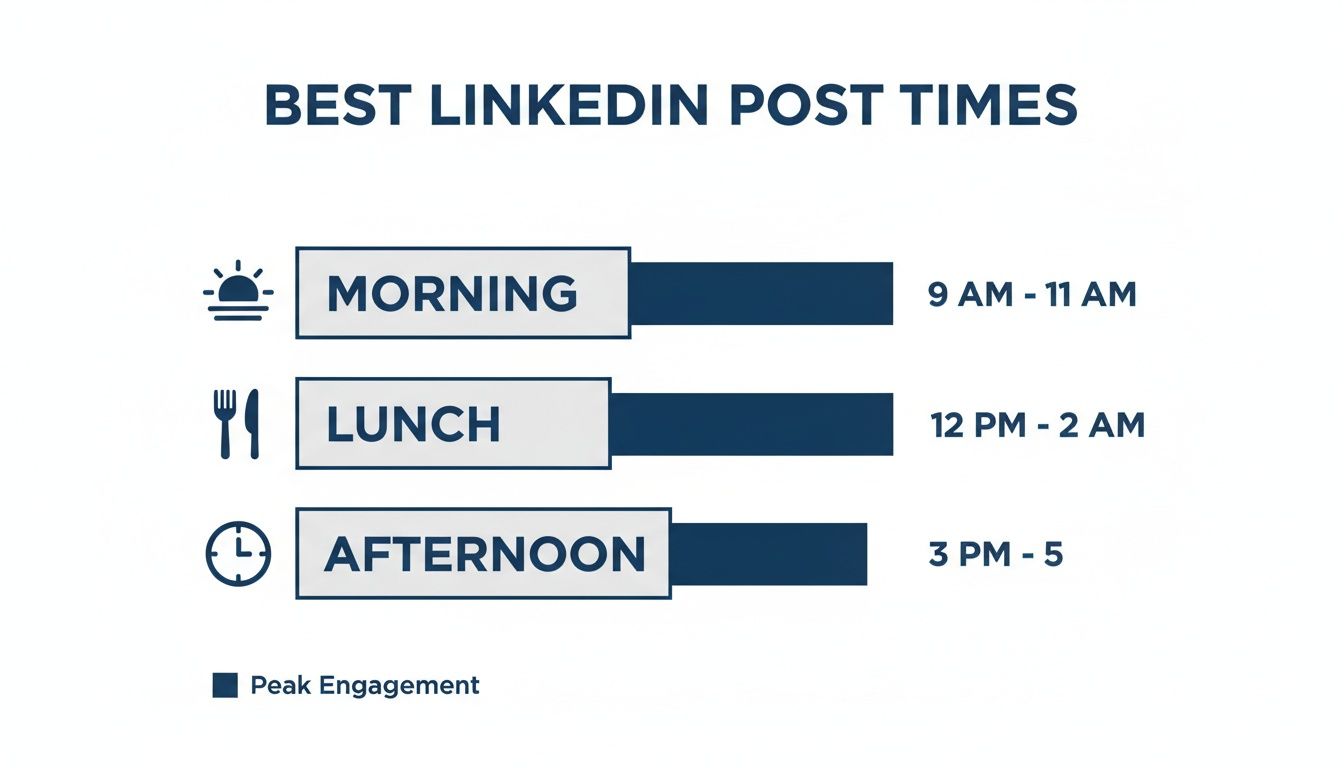
As you can see, those morning, lunchtime, and afternoon slots line up perfectly with the most common breaks in a professional's day, giving you prime opportunities to get noticed.
Data-Backed Posting Windows
While "during the workday" is a solid rule of thumb, we can get even more specific. After digging through tons of research and data, a few clear patterns emerge.
To give you a starting point, here’s a quick-reference table summarizing the general high-engagement windows.
General Recommended LinkedIn Posting Times (Local Time)
This table summarizes the highest engagement windows on LinkedIn based on global data, providing a quick reference for general best practices.
| Day of the Week | Primary Window | Secondary Window | Notes |
|---|---|---|---|
| Monday | 10:00 AM - 1:00 PM | 8:00 AM - 9:00 AM | Engagement ramps up as the workweek begins. |
| Tuesday | 10:00 AM - 12:00 PM | 1:00 PM - 3:00 PM | Often considered one of the strongest days for engagement. |
| Wednesday | 9:00 AM - 1:00 PM | 3:00 PM - 4:00 PM | Mid-week is a peak time for professional networking and content consumption. |
| Thursday | 10:00 AM - 12:00 PM | 1:00 PM - 3:00 PM | Another high-performing day, similar to Tuesday. |
| Friday | 9:00 AM - 11:00 AM | 12:00 PM - 1:00 PM | Engagement tends to drop off in the afternoon as the weekend approaches. |
| Saturday & Sunday | Sporadic | N/A | Generally low engagement; best to avoid unless you have a specific reason. |
These times are a fantastic launchpad for your strategy. Multiple studies confirm that the safest, most reliable window is between 7 AM and 4 PM on weekdays. If you want to get even more precise, many analysts point to Tuesdays and Thursdays between 10 AM and 11 AM as the absolute peak for engagement.
Scheduling your posts for these mid-morning or lunchtime slots is a simple, data-driven way to give your content the best possible chance to succeed. You can learn more about the data behind these findings and how to apply them to your own content strategy.
Why Posting Time Is Your Secret Weapon on LinkedIn
Before we get into the nitty-gritty of custom schedules, let's first talk about why timing is such a game-changer. Think of LinkedIn as a massive, always-on digital conference. You wouldn't book the main stage for your big presentation at 3 AM on a Tuesday, would you? Of course not. The room would be empty.
Posting at the right time is the exact same principle: it’s about showing up when your audience is actually there and ready to listen. This simple shift has a massive impact on your content's success, and it all comes down to how the LinkedIn algorithm works. It doesn’t just blast your post to everyone at once. Instead, it dips a toe in the water, showing it to a small, select group of your connections first.

The Critical Golden Hour
That initial test run is what many of us call the "golden hour", the first 60 to 90 minutes after your post goes live. The engagement your content gets in this window (likes, comments, shares) is a powerful signal to LinkedIn’s algorithm. One important update on this, though: the golden hour carries less weight than it used to, because LinkedIn now keeps evaluating posts for days rather than settling their fate in the first hour. Our guide to the LinkedIn algorithm in 2026 breaks down what replaced it and why deleting a slow post is now the costliest mistake you can make.
It's like a movie premiere. If the first crowd gives a standing ovation, the studio knows they have a hit and puts more marketing muscle behind it. If the theater is half-empty and the applause is polite at best, that movie is probably heading for streaming obscurity.
Your post's performance during the first hour is the single most important factor determining its long-term reach. A strong start creates a ripple effect, pushing your content to a wider audience over the next few hours and even days.
This is why finding the best time to post on LinkedIn isn't just a minor detail; it's a core part of a winning strategy.
Navigating a Crowded Feed
Let's be honest: the competition for eyeballs on LinkedIn is fierce and getting fiercer every day. As more people and companies share content, the space in your audience's feed is shrinking. Every single impression is more valuable than ever before.
The data backs this up. A recent benchmark report found that overall LinkedIn engagement dropped by 8.3% in the first half of the year, with the average engagement rate per impression hovering around 5.20%. When attention is that scarce, timing becomes your unfair advantage. It helps you grab a bigger piece of a shrinking pie. You can dig into more stats on the impact of timing on engagement.
This is exactly why you see so many recommendations pointing to specific weekday time slots. By posting during these peak hours, you give your content a fighting chance to outperform the average and stand out from the noise.
Taking Your Content From Good to Great
Once you understand how powerful timing is, you can shift your strategy from just "posting stuff" to strategically delivering it. Nailing your timing gives you a few key advantages:
- Maximized Initial Engagement: You get those crucial early likes and comments that tell the algorithm your post is worth showing to more people.
- Increased Long-Term Visibility: A strong start helps your content break out beyond your immediate network to second- and third-degree connections.
- Improved Content ROI: All the effort you put into creating great content actually pays off with more views, leads, and meaningful conversations.
Ultimately, mastering your posting schedule is how you ensure your hard work gets seen. It turns your LinkedIn profile from a static resume into a dynamic platform for building your brand. Without a smart timing strategy, even the most brilliant content can end up shouting into the void. The easiest way to lock in those windows once you find them is to use a LinkedIn post scheduler that auto-publishes at your best times every week, so the right moment never passes you by.
How Your Industry Dictates the Perfect Posting Time
It’s easy to fall for the idea of a universal "best time to post on LinkedIn." But thinking that way is like assuming every professional starts their day at 9 AM sharp with a black coffee. The reality is far more textured.
A software developer’s daily routine is worlds away from a hospitality manager’s or a healthcare administrator’s. That’s why a one-size-fits-all schedule just doesn't cut it. Different industries simply operate on different clocks. The real key to unlocking engagement isn't just knowing when people are online, but when the right people in your specific world are online and actually paying attention.
Matching Your Cadence to Your Sector
To get this right, you have to understand the unique rhythm of your target industry. Are you trying to reach B2B tech leaders? They’re often early risers, catching up on industry news and their LinkedIn feeds before the day’s meetings kick off. This makes an early morning post a prime opportunity to grab their attention.
On the other hand, if your audience is full of creatives or media pros, their most active moments might come later. Their days can be less structured, with networking and bursts of inspiration often happening mid-morning or even in the afternoon. This same logic applies everywhere, from finance to education.
The most successful LinkedIn strategies are not built on universal best practices alone. They are tailored to the specific daily and weekly work patterns of the industry they aim to serve. Stop broadcasting into the void and start publishing when your audience is truly listening.
A Data-Driven Look at Industry Posting Times
So, where do you start? Thankfully, extensive research gives us some solid clues, revealing clear patterns across different sectors. While general peak times like Tuesdays and Thursdays around 10-11 AM are a decent baseline, things get a lot more interesting when you put an industry filter on the data.
For example, B2B audiences tend to be most responsive before 9 AM on weekdays. Professionals in education, however, often hit their peak engagement between 9 AM and 12 PM. The tech and healthcare fields also lean toward morning posts, while industries like finance and hospitality can see better results later in the day. Understanding these nuances is crucial for building a content calendar that actually performs. For a deeper dive, you can explore more granular insights on how posting times vary by industry and day.
Optimal LinkedIn Posting Times By Industry
To give you a more actionable starting point, here’s a breakdown of recommended posting windows tailored to the unique activity patterns of different professional sectors. Use these as your foundation, but remember to test and refine based on your own results.
| Industry | Best Days | Peak Time Windows (Local Time) | Rationale |
|---|---|---|---|
| B2B & Tech | Tuesday, Wednesday, Thursday | 7 AM - 9 AM & 4 PM - 5 PM | Professionals are checking in before the workday starts and wrapping up before they leave. |
| Healthcare | Tuesday, Wednesday, Thursday | 8 AM - 10 AM & 12 PM - 2 PM | Catches administrators during their morning routine and professionals on their lunch break. |
| Media & Entertainment | Wednesday, Thursday, Friday | 10 AM - 1 PM | Creatives often have flexible schedules, with peak activity happening around mid-day. |
| Education | Monday, Wednesday, Thursday | 9 AM - 12 PM | Aligns with the standard school day when academics and administrators are most engaged online. |
By syncing your posting schedule with these industry-specific habits, you dramatically increase the chances that your content will land in front of a relevant and receptive audience. This targeted approach is a cornerstone of finding your true best time to post on LinkedIn.
Best Time to Post on LinkedIn by Day: A Full Breakdown
Related searches show that people want to know the best posting window for each specific day. Here is a day-by-day guide based on aggregated 2026 data from multiple studies.
Best Time to Post on LinkedIn on Monday
Primary window: 10 AM - 12 PM local time.
Monday mornings start slow on LinkedIn. Most professionals are clearing inboxes and attending standup meetings before 10 AM. Engagement picks up around mid-morning once the initial workweek chaos settles. Avoid posting before 9 AM on Mondays -- save your best content for later in the week and use Monday for lighter formats like quick tips or polls.
Best Time to Post on LinkedIn on Tuesday
Primary window: 10 AM - 12 PM local time. Secondary: 1 PM - 3 PM.
Tuesday is consistently rated as one of the highest-engagement days on LinkedIn. The 10-11 AM slot is the single strongest hour across most datasets. If you can only post once per week, make it Tuesday morning. This is the day to publish your highest-value content -- frameworks, case studies, and data-driven insights.
Best Time to Post on LinkedIn on Wednesday
Primary window: 9 AM - 1 PM local time. Secondary: 3 PM - 4 PM.
Wednesday is the peak day for dwell time, meaning people spend more time reading longer content. This makes it ideal for carousels, long-form posts, and in-depth analyses. The engagement window is broader than other days, giving you more flexibility in scheduling.
Best Time to Post on LinkedIn on Thursday
Primary window: 10 AM - 12 PM local time. Secondary: 1 PM - 3 PM.
Thursday mirrors Tuesday in performance and is another top-tier day for engagement. The afternoon secondary window is particularly strong on Thursdays, as professionals start planning for the end of the week. Bold takes and discussion-starter content tend to perform well.
Best Time to Post on LinkedIn on Friday
Primary window: 9 AM - 11 AM local time.
Friday engagement is front-loaded before lunch. Once the afternoon hits, attention fragments as people mentally shift toward the weekend. Keep Friday content concise and easy to consume -- weekly roundups, quick frameworks, or listicles work well. Avoid publishing your most important pieces on Fridays.
Best Time to Post on LinkedIn on Saturday and Sunday
If posting: 10 AM - 12 PM local time. Expect lower overall engagement.
Weekend engagement drops 60-80% compared to weekdays. If you have a global audience or target entrepreneurs and solopreneurs who browse on weekends, the late-morning window captures the most activity. Keep content personal and lightweight -- behind-the-scenes stories or save-worthy templates. For everyone else, save your content for the workweek. For more context on crafting the right posting rhythm, see our guide on best practices for posting on LinkedIn.
When Is the Best Time to Publish a LinkedIn Newsletter?
Publish LinkedIn newsletters early on Tuesday or Wednesday morning, roughly 8 AM to 10 AM in your audience's local time. Newsletters do not follow feed-post timing rules, because every subscriber gets a notification and an email the moment you publish, so you are competing for inbox attention rather than feed position.
- Earlier beats later, consistently. Newsletter publishers report engagement falling the later in the day an issue goes out. An 8 AM issue lands at the top of the morning inbox; a 4 PM issue lands under everything already sitting there.
- Tuesday and Wednesday beat Monday and Friday. Monday mornings are spent clearing the weekend backlog, and Friday issues get postponed into a weekend that never comes. Midweek is when subscribers actually read long-form.
- Cadence outranks the exact hour. LinkedIn asks you to commit to a publishing frequency when you create a newsletter, and subscribers are notified on that rhythm. A predictable weekly slot compounds; a perfectly timed but irregular one does not.
One operational constraint worth knowing before you experiment: if you delete a LinkedIn newsletter, LinkedIn requires you to wait two weeks before creating a new one. Change the send time inside an existing newsletter rather than starting over.
What Do the 2026 Best-Time-to-Post Studies Actually Say?
The major 2026 studies agree on the window and disagree on the winner: every large dataset puts peak LinkedIn engagement on Tuesday through Thursday, mid-morning (9 AM to 12 PM), but which single hour ranks first changes from study to study.
- They disagree because their samples differ. A study built on B2B SaaS accounts will land on business hours; one built on a broad consumer-adjacent sample skews later and flatter. Neither is wrong for its own dataset, and neither is automatically right for your audience.
- The spread between "best" and "average" hours is smaller than the spread between accounts. Moving from a mediocre hour to an optimal one is typically a modest lift. Moving from a post nobody wants to read to one they do is not.
- Treat published times as a starting hypothesis, not an answer. Use the windows in this guide for your first four weeks, then replace them with your own analytics using the testing method below.
Uncovering Your Audience's Unique Activity Patterns

Industry data gets you into the right ballpark, but your own analytics will hit the home run. While general posting times are a fantastic starting point, they’re just averages based on millions of users. Your audience is unique. To truly nail down the best time to post on LinkedIn, you have to stop guessing and start digging into your own performance data.
Think of it like tuning a guitar. Standard tuning gets you close, but the real magic happens when you make tiny adjustments based on the specific acoustics of the room. Your LinkedIn analytics is that room—and it’s time to listen to what it’s telling you. This is how you go from following best practices to creating your own.
Start with LinkedIn's Native Analytics
LinkedIn gives you a suite of analytics tools right on your Company Page that are full of clues about when your audience is most active. It won’t give you a giant "POST NOW" button, but it provides the raw data you need to form a solid hypothesis.
To get started, head over to your Company Page admin view and click on the Analytics tab. You’ll want to poke around in a few key areas:
- Followers: This section shows you who is following your page—their location, industry, seniority, and more. If you see that 40% of your audience is on the West Coast, you’ll know that a 9 AM EST post is probably catching them before they’ve had their coffee.
- Visitors: Here, you can spot traffic patterns to your page. Are people checking you out more on certain days? A spike in visitors could signal a great window to post new content.
- Content: This is where you’ll find the gold. This tab breaks down the performance of your individual posts, highlighting key stats like impressions, reactions, and comments.
Scan through your top-performing posts and look for a common thread. Did your three most engaging posts last month all go live around 10 AM on a Tuesday? That’s not a coincidence; it's a data point. The goal is to connect your best content with the specific day and time it was published.
A/B Testing Your Way to Peak Performance
Once you’ve analyzed your past performance and have a hunch, it’s time to put it to the test. A/B testing is a simple but powerful way to compare two variables—in this case, different posting times—to see which one comes out on top.
A/B testing removes the guesswork. It’s a methodical process that allows you to prove, with your own data, which time slots generate the most engagement from your specific audience.
Here’s a simple framework to get started:
1. Form a Clear Hypothesis Based on your analytics, create a specific, testable statement. Something like: "I believe posts published on Thursdays at 10 AM local time will get at least 15% more impressions than posts published on Fridays at 2 PM."
2. Schedule Your Test Posts For the next two to four weeks, create two similar pieces of content each week. They should be the same format (e.g., two image posts or two carousels) and on similar topics to make it a fair fight.
- Post A: Publish this one at your control time (your old standby, like Friday at 2 PM).
- Post B: Publish this one at your new, hypothesized time (e.g., Thursday at 10 AM).
3. Analyze the Results After each post has been live for at least 24 hours, check the metrics. Zero in on the metric from your hypothesis—in this case, impressions. But don't forget to track clicks, reactions, and comments to get the full picture. If you're fuzzy on the details, our guide on what impressions mean on LinkedIn can help clear things up.
After a few weeks of testing, average the results for each time slot. If your Thursday morning posts are consistently crushing your Friday afternoon ones, you've found a new, data-backed "best time" to post. This ongoing cycle of hypothesizing, testing, and analyzing is the secret to keeping your schedule perfectly tuned for maximum impact.
Tools and Tactics for Flawless Post Scheduling
Knowing the perfect time to post is only half the battle. The other half? Actually doing it. Flawless execution is what separates a good strategy from real results, and that means having a practical, repeatable process for hitting those narrow posting windows every time.
Let's be honest, manual posting is a recipe for inconsistency. Life gets in the way. Meetings run over, creative inspiration dries up, and before you know it, you've missed your shot. This is where a good free LinkedIn post scheduler becomes your secret weapon. It acts as a reliable assistant, pushing your content live at the exact right moment, whether you're at your desk or not. That kind of consistency is a powerful signal to the LinkedIn algorithm, too.
Let AI Automate Your Optimization
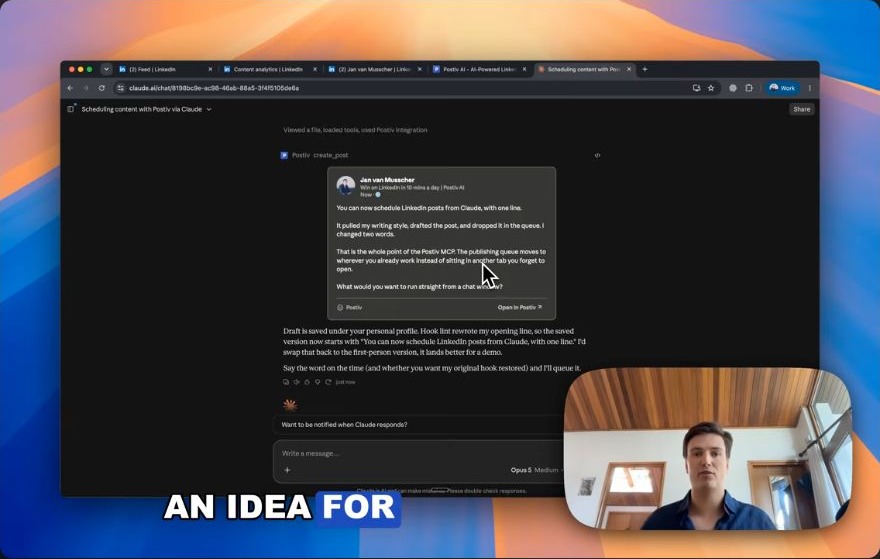
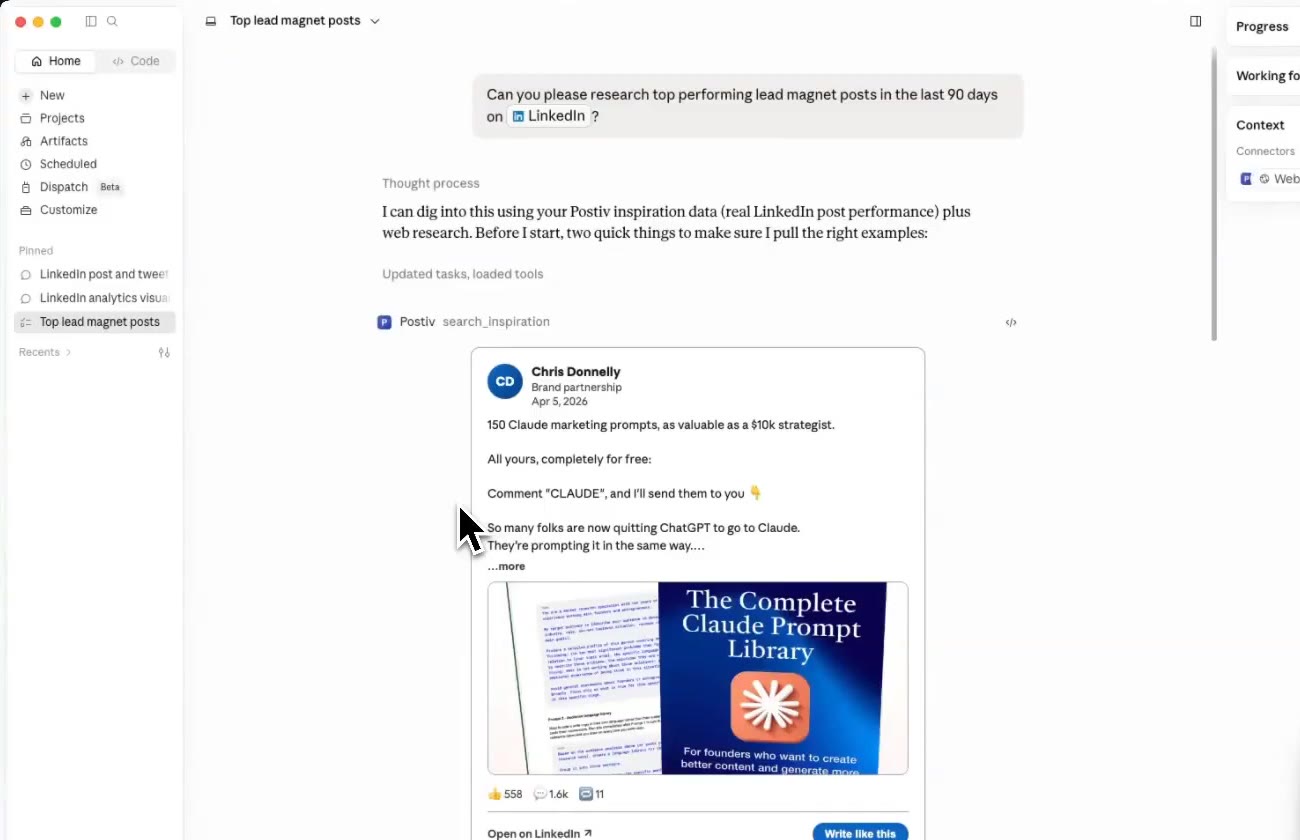
Today's best LinkedIn scheduling tools are so much more than simple "set it and forget it" platforms. The smart ones have become genuine partners in your content strategy. For instance, platforms like Postiv AI use AI-powered features to take all the guesswork out of the equation.
Instead of you having to dig through analytics to find your best times, an AI-driven "Best Time to Post" feature does the heavy lifting. It crunches the numbers on your past performance, figures out when your unique audience is most likely to engage, and then gives you clear, data-backed recommendations.
This is a game-changer. You're no longer relying on generic industry advice. You're operating with a hyper-personalized schedule built around your followers' actual behavior. It’s like having a data scientist on your team, constantly fine-tuning your calendar for peak performance.
With these kinds of insights, you can confidently map out your content for weeks or even months, knowing it's optimized. To get your process dialed in, it's worth exploring the best LinkedIn scheduler that fits your specific needs.
The Power of Content Batching
One of the most effective ways to stay consistent is content batching. The idea is simple: set aside a dedicated block of time—maybe a few hours on a Monday morning—to create all your LinkedIn content for the week ahead.
It’s an incredibly efficient way to work. You get into a creative flow without the constant stop-and-start of daily content creation. Once all your posts are written, polished, and have their visuals, you can load them into your scheduler in one session.
Here’s why batching is so powerful for nailing your timing:
- Guarantees Consistency: You’ll never have a "nothing to post" day again.
- Lowers Daily Stress: It frees up your headspace during the week for engaging with your audience instead of scrambling to write a post.
- Boosts Content Quality: It gives you the space to be more thoughtful and strategic, avoiding that last-minute rush.
Batching also makes it easy to prep your hashtags in the same sitting. Run each post's topic through a free LinkedIn hashtag generator while you're already in that content-creation flow, so you're not hunting for tags one post at a time later.
When you pair content batching with a smart scheduler, you create a seamless workflow that ensures you hit the best time to post on LinkedIn, every single time. If you’re managing multiple accounts or running complex campaigns, you might want to look into the world of https://postiv.ai/blog/best-linkedin-automation-tools to streamline things even further.
Managing a Global Audience with Time Zones
But what if your audience is scattered across the globe? If you have connections from New York to London to Singapore, a single "best time" doesn't really exist. Posting at 10 AM your time could be 3 AM for a huge chunk of your followers.
This is another problem a robust scheduling tool solves beautifully. The best platforms allow you to:
- Schedule for specific time zones, tailoring your posts to different geographic audiences.
- Stagger your content, publishing the same post at different times over a 24-hour period to catch everyone.
- Analyze regional performance to see which time slots work best in which parts of the world.
By putting these tools and tactics into practice, you build a resilient and efficient system. You'll move beyond just knowing the best times to post and start building a real operational framework that guarantees you can execute flawlessly.
Bringing It All Together for Lasting LinkedIn Success
We’ve covered a lot of ground, from the big-picture data on popular posting times to the nitty-gritty of what works for your specific audience. The path forward is pretty clear: start with the general advice, then get personal with your own data to carve out a schedule that truly works.
This whole process highlights a key truth: figuring out the best time to post on LinkedIn isn't a "set it and forget it" task. It’s a living, breathing part of your strategy.
Think of it as a constant feedback loop. You listen, you test, and you adapt. Audience habits change, new trends pop up, and what killed it last quarter might not land the same way next month. This is why having a data-first mindset is your secret weapon for building a content strategy that lasts.
Embracing a Cycle of Continuous Improvement
When you commit to this framework, you're officially done with guesswork. You’re building a repeatable system that doesn't just chase vanity metrics but drives real, meaningful engagement. It’s how you build authority and, yes, even generate leads.
The heart of this cycle is simple:
- Start with a Hypothesis: Take the industry data and your own analytics to make an educated guess. "I bet Tuesday mornings will work best for this type of content."
- Test Systematically: Run some simple A/B tests. Post similar content at different times and see what happens.
- Analyze the Results: Dive into your LinkedIn analytics. What are the numbers actually telling you? Focus on the metrics that matter for your goals.
- Refine and Repeat: Take what you learned, adjust your schedule, and then do it all over again with a new test.
This iterative approach is what keeps your LinkedIn strategy from getting stale. It’s about being a student of your audience and letting their behavior—not just a hunch—guide your every move.
Of course, perfect timing doesn't mean much if the content itself falls flat. Quality and timing are two sides of the same coin. For a deep dive into crafting posts that stop the scroll, check out our guide on how to write LinkedIn posts that capture attention.
Ultimately, success on LinkedIn boils down to getting great content in front of the right people at the right time. Once you’ve dialed in your posting schedule, fold it into your larger proven LinkedIn lead generation strategies. When these pieces click together, you create a powerful engine for growth, making sure your message is heard loud and clear.
Answering Your Lingering Questions About LinkedIn Posting
Even with a solid game plan, a few specific questions always seem to surface when you start getting serious about your LinkedIn schedule. Getting the timing right isn't just about picking a day and time; it’s about understanding how all the moving parts of your content strategy fit together. Let's dig into some of the most common questions I hear.
How Does Posting Frequency Affect My Best Times?
Think of your posting frequency and timing as two sides of the same coin. Consistency is what signals to the LinkedIn algorithm that you’re a valuable contributor, which helps boost your visibility over the long run. If you’re only posting once a week, hitting that peak engagement window is absolutely crucial. You have one shot to make it count.
But if you're posting more often, say three to five times a week, you've got a lot more breathing room. You can reserve your prime-time slots for your most important, pillar content. Then, you can use the other, less-optimal times to experiment with new ideas or reach different segments of your audience who might be online at different hours. The main thing is to maintain a predictable rhythm so your followers start to anticipate your content. For a full breakdown of the data, check out our guide on how often you should post on LinkedIn.
How Long Should I Test Different Posting Times?
This is where a lot of people trip up. They'll test a new time slot for a week, not see a huge difference, and then give up. The performance of a single post can easily be a fluke, so you need enough data to spot a genuine pattern. For a proper A/B test, I always recommend sticking with it for at least four to six weeks.
That timeframe gives you enough runway to:
- Publish several different posts in each of your test slots.
- Smooth out the data from any weird variables, like a public holiday or a major news event.
- Collect enough engagement data to make a decision you can actually stand behind.
If you test for anything less than a month, you’re just guessing. You might end up changing your whole strategy based on a random spike in engagement rather than a real trend in your audience's behavior.
Is It Ever a Good Idea to Post on Weekends?
For the vast majority of B2B brands and professionals, the short answer is no. Engagement on LinkedIn usually falls off a cliff on Saturdays and Sundays. Most people are logged out of "work mode," so your content is likely to get lost in the void. Sticking to standard business hours during the week is almost always your best bet.
That said, there are a few exceptions. If you’re targeting people who work non-traditional hours (like folks in hospitality or retail management) or if your audience is primarily in a time zone halfway around the world, a weekend post could potentially work. The rule of thumb is to only post on weekends if you have hard data from your own analytics showing your audience is actually there. Otherwise, save your best content for the workweek.
While weekend posting might work for a small handful of accounts, it’s a low-reward, high-risk strategy for most. Your time and content are better spent targeting those proven high-engagement windows from Tuesday to Thursday.
Do Different Types of Content Have Different Peak Times?
That’s a sharp question, but the answer is probably simpler than you'd expect. In my experience, the best time to post on LinkedIn is more about when your audience is active than what format you're using. Your followers are scrolling and ready to engage at specific times, and it doesn't really matter if you're sharing a video, a long-form article, or a quick text post.
So, instead of hunting for the "best time for video posts," concentrate on aligning your very best content—no matter the format—with your overall peak engagement windows. A fantastic video, a compelling article, or a thought-provoking poll will always perform best when the most people are there to see it.
Does the Timing of LinkedIn Posts Really Matter?
Absolutely. LinkedIn's algorithm evaluates your post's performance during the first 60-90 minutes after publishing. If your content gets strong early engagement during this window, the algorithm pushes it to a wider audience over the next 48-72 hours. Post when your audience is offline, and even great content will struggle to gain traction because that initial engagement signal never fires. Data from Buffer shows weekday morning posts earn nearly double the engagement of off-hour publishing, confirming that timing is one of the most important levers you can pull.
What Is the Best Time to Post on LinkedIn for Maximum Exposure?
For maximum impressions, post Tuesday through Thursday between 10 AM and 11 AM in your audience's local time zone. This window consistently shows the highest reach across 2026 data from Sprout Social, Buffer, and multiple independent studies. Pair this timing with a strong opening hook so your post earns reactions quickly during the algorithm's initial distribution test. If you want to go further, stagger content across both the 10-11 AM primary window and a 1-3 PM secondary window to capture professionals returning from lunch. For a comprehensive content strategy that goes beyond timing, explore our LinkedIn content strategy guide.
What Is the Best Time to Post on LinkedIn on Monday?
Monday is a solid day to post, but it warms up slower than mid-week. The best Monday window is 10 AM - 12 PM local time. Most professionals spend the first hour or two of Monday clearing email and attending meetings, which means early morning posts tend to underperform. Target the late-morning window when people shift into content browsing mode. Use Mondays for lighter content formats like quick tips, planning templates, or polls that invite easy engagement.
What Is the Best Time to Post on LinkedIn on Sunday?
Sunday engagement is considerably lower than weekdays, making it a risky day for important content. If you do post, aim for 10 AM - 12 PM when some professionals enter a week-ahead planning mindset. Keep the content lightweight and save-worthy -- goal-setting frameworks, weekly planning prompts, or personal stories with professional lessons tend to work best. Only commit to regular Sunday posting if your analytics confirm your audience is active on weekends.
Ready to stop guessing and start scheduling with confidence? Postiv AI analyzes your unique audience engagement patterns and tells you exactly when to post for maximum impact. It's the smartest way to make sure your hard work gets the visibility it deserves. Discover your personalized best posting times with Postiv AI.