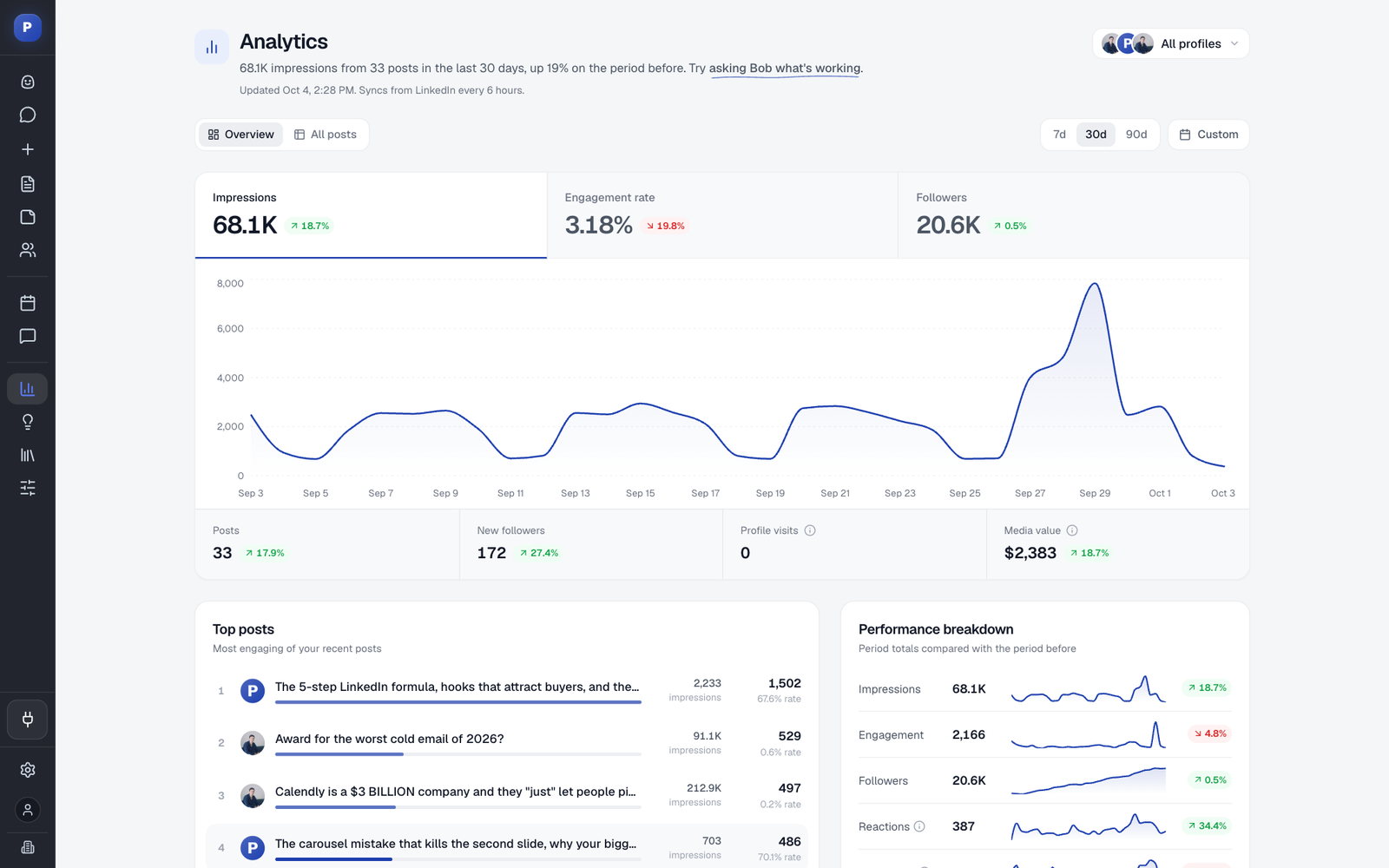
When we talk about personal branding for executives, we're not talking about vanity or self-promotion. It's the deliberate, strategic process of shaping how you're perceived in your industry. It's about becoming a trusted, authoritative voice whose insights create real value—for you and your entire organization.
Why Executive Personal Branding Is A Strategic Imperative
In today's market, a leader's personal brand isn't just a "nice-to-have." It's a high-impact corporate asset. The line between an executive's reputation and the company's has all but disappeared.
When leaders share their expertise, vision, and even their journey openly, they build a layer of human connection and trust that traditional corporate marketing struggles to achieve.
Think about it from a buyer's perspective. Imagine a B2B prospect choosing between two nearly identical software solutions. One company's leadership team is invisible online. The other’s CTO, however, is active on LinkedIn—sharing insights on industry pain points, celebrating team successes, and articulating a clear vision for the future.
Which company feels more credible? That visible expertise becomes an immediate, powerful differentiator. It’s not just theory; it has a measurable impact on the bottom line.
The Tangible Business Impact of Visible Leadership
The data backs this up. A strong executive presence online directly influences business outcomes, primarily by building trust at scale.
For instance, a staggering 82% of people are more likely to trust a company when its senior executives are active on social media. This trust naturally trickles down to purchasing decisions, partnerships, and even recruiting efforts.
The table below breaks down exactly how a strong personal brand translates into concrete business wins.
The Strategic Value of an Executive Personal Brand
| Benefit | Business Impact | Key Statistic |
|---|---|---|
| Increased Trust & Credibility | Shortens sales cycles and builds customer confidence. People buy from people they trust. | Content shared by employees gets 8x more engagement than content shared by brand channels. |
| Enhanced Talent Acquisition | Attracts top-tier talent who want to work for and learn from recognized industry leaders. | 75% of job seekers research a company's online reputation before applying. |
| Strengthened Brand Reputation | Humanizes the corporate brand, making it more relatable and resilient during a crisis. | 92% of consumers trust recommendations from individuals over brands. |
| Market & Investor Confidence | Signals a forward-thinking, competent leadership team, which can positively influence valuation. | Executives with strong social media presences are seen as better leaders by 77% of buyers. |
A strong executive brand is a multi-faceted asset that strengthens the entire organization, from the sales pipeline to the HR department.
"Your personal brand is a promise to your network—a promise of what they can expect from you. For an executive, this promise becomes synonymous with the company’s promise."
Moving From Leader to Thought Leader
Ultimately, effective personal branding is what elevates an executive from just a leader to a thought leader. It's the difference between simply running a company and actively shaping an entire industry.
This distinction is what gives you a true competitive edge. It requires consistently sharing a unique point of view that delivers real value and challenges your audience to think differently. If you're curious about diving deeper, our guide explores what thought leadership marketing is and why it matters.
By overlooking personal branding, executives leave immense value on the table. They miss a critical opportunity to fortify their company’s position in a crowded market.
Laying the Foundation for Your Executive Brand
Before you even think about hitting 'post,' we need to do the foundational work. This is the strategic thinking that separates executives who just make noise from those who build genuine influence. It's the difference between random acts of content and a deliberate plan that shapes your reputation.
I’ve seen too many leaders jump straight into posting. Without this groundwork, their message gets muddled, feels inconsistent, and ultimately, fails to connect with anyone. The first step isn't about content; it's about getting crystal clear on what you stand for, who you're talking to, and the unique value you bring to the table.

This foundational stage ensures every post, comment, and connection you make has a purpose. Let's get it right.
Define Your Core Pillars of Expertise
Your entire personal brand needs to rest on two to three core pillars. These are the specific domains where you have deep, hard-earned knowledge and a unique perspective. Trying to be an expert in everything just makes you an expert in nothing.
Think beyond your job title. "Chief Technology Officer" is a role, not a brand pillar. Get more specific. Your pillars could be something like:
- AI adoption in regulated industries: Focusing on the real-world challenges and opportunities of implementing AI in finance or healthcare.
- Scaling distributed engineering teams: Sharing practical lessons on culture, tooling, and communication for remote-first organizations.
- Sustainable technology infrastructure: Discussing the business case for green computing and energy-efficient data centers.
These pillars become your content guardrails. They keep you focused and signal to your audience exactly what they can expect to learn from you.
A well-defined personal brand clearly answers the question: "What problem do you solve for whom?" Without that clarity, your content will lack direction and fail to attract the right audience.
Articulate Your Unique Point of View
Once you've got your pillars, you need to figure out your unique point of view (POV) within each. It's not enough to just talk about AI in finance; you need to say something distinctive about it. Your POV is your "special sauce"—the combination of your experience, beliefs, and vision that makes your perspective worth following.
Ask yourself these questions:
- What's a common industry belief that I completely disagree with?
- What future trend am I seeing that others are missing?
- What hard-won lesson can I share from a past failure or success?
For example, a marketing executive’s POV might be: "While everyone is chasing viral trends, the real ROI comes from building deep community through unscalable interactions." This immediately sets them apart and attracts a specific type of follower who values substance over sizzle. For a deeper dive into crafting your professional image, check out these strategies for building a powerful personal brand that truly opens doors.
Map Your Ideal Audience Persona
You can't build a powerful brand if you don't know who you're talking to. Creating an audience persona is absolutely critical, and you need to go beyond simple demographics. Get into their heads.
Let's say you're a CFO, and your target audience is early-stage startup founders. Your persona map needs to get granular:
- Their Primary Goals: Securing Series A funding, hitting cash flow positivity, building a finance function that can actually scale.
- Their Biggest Pain Points: Inaccurate forecasting keeps them up at night, they're terrified of their burn rate, and they have zero experience with investor relations.
- Where They Hang Out: Tech-focused newsletters, specific venture capital blogs, and certain LinkedIn communities.
When you understand your audience this deeply, you can create content that feels like you're speaking directly to them. Instead of a generic post about financial planning, you can write about "The 3 Financial Models Every Founder Needs Before Pitching a VC." This targeted approach is what builds a loyal following and turns your profile from a static resume into an indispensable resource.
Developing Your Executive Content Strategy and Voice
With your brand foundation set, it's time to build the engine: your content strategy. This isn't about firing off random thoughts into the ether. It's a deliberate plan to create and share insights that cement your expertise and draw in the right people.
The most effective executive content strategies I’ve seen are sustainable, authentic, and built around a few core ideas. The goal is to graduate from sterile corporate announcements and career updates. Your content should be a constant signal of your unique viewpoint, transforming everyday leadership moments into stories that spark real conversations.
Establishing Your Core Content Pillars
Your content needs a backbone. Think of content pillars as the handful of core themes you'll return to again and again. These should flow directly from the expertise pillars you already defined. For most executives, they naturally cluster into a few key categories that create a balanced, compelling mix.
A fantastic framework to start with is "Teach, Story, Vision, People." It’s a simple model that ensures you’re not a one-trick pony, offering value in different ways and showing multiple sides of your leadership.
- Teach (Your Expertise): This is where you share your sharpest industry analysis. Break down a complex topic, offer a contrarian take on a popular trend, or give your audience an actionable framework they can use tomorrow.
- Story (Your Experience): This is the heart of connection. Share leadership lessons you learned the hard way—from both wins and failures. These personal accounts are incredibly powerful.
- Vision (Your Company): Articulate where you see your company or the entire industry heading. This isn't a press release. It's your perspective on the future and why it matters.
- People (Your Team): Shine a spotlight on your team's wins. Highlighting their achievements shows great leadership, reinforces your company culture, and gives credit where it's due.
By rotating through these pillars, your feed becomes authoritative, human, and forward-thinking. It stops your brand from feeling flat or one-dimensional. To see exactly how these pillars come to life, explore our detailed guide on building a successful LinkedIn content strategy for 2025.
Discovering Your Authentic Executive Voice
Your voice is how your brand feels. It's the personality that shines through your writing, and getting it right is non-negotiable for building a real connection. An executive's voice needs to strike a delicate balance between being authoritative and approachable.
Think of it this way: authoritative means you have a clear, confident point of view backed by years in the trenches. Approachable means you share that view in a way that invites discussion, not just distant admiration. You're a guide, not a lecturer.
Finding your voice isn't about inventing a persona. It's about amplifying who you really are. Are you naturally direct and data-driven? Analytical and questioning? Or more of an inspirational storyteller? Lean into what comes naturally.
The executives who are winning on LinkedIn today are transparent and authentic. Polished marketing-speak just doesn’t land anymore. Audiences crave real human connection, a trend that's only grown with rising skepticism toward traditional media—with only 31% of Americans trusting it, people are looking for credible individuals they can trust. Authentic stories that openly discuss challenges are the new currency of trust. You can read more about this shift and the importance of authenticity in CEO branding.
Turning Experience Into Compelling Stories
Storytelling is your most powerful tool. It’s what turns a dry business lesson into something memorable and impactful. And the best part is, great stories follow simple, repeatable formulas.
One of the most effective frameworks I use with executives is the Challenge-Action-Result model.
- Challenge: Set the scene. What was the specific problem you or your team were up against? Get specific to make it relatable.
- Action: Describe the concrete steps you took. What was the plan? What did you actually do?
- Result: Explain what happened. What was the tangible outcome? And most importantly, what was the key lesson you learned that your audience can take away?
Here’s what that looks like in practice:
- Challenge: "After a brutal quarter, our sales team's morale was in the gutter. The energy was gone. I could see burnout creeping in."
- Action: "Instead of another rah-rah speech, I cleared my calendar for a week. I held individual, no-agenda 'walk and talks' with every single person on the team, just to listen."
- Result: "The feedback was eye-opening. We found three huge process bottlenecks we fixed immediately. Morale didn't just recover; it soared. We went on to have our best quarter ever. The lesson? Sometimes the best leadership action is to stop talking and start listening."
This simple structure transforms a generic management anecdote into a valuable, engaging story. It’s authentic, it’s actionable, and it positions you as a thoughtful leader—a true cornerstone of effective personal branding for executives.
2. Choosing High-Impact LinkedIn Formats and Visuals
A powerful message is only half the battle on LinkedIn. The other half is packaging it in a way that stops the scroll.
To really thrive, you need to speak the platform's visual language. The right format can make the difference between your post being seen by a handful of people or thousands. Think of it this way: how your content looks is just as important as what it says. Different formats achieve different goals, from sparking quick conversations to delivering deep, educational insights.
Let's break down which ones work best.
The Understated Power of Text-Only Posts
Never underestimate a well-crafted text-only post. In a feed overflowing with images and videos, pure text can cut through the noise with its clarity and directness. It's the perfect way to share a sharp opinion, a hard-won leadership lesson, or a thought-provoking question that gets people talking.
The secret here is readability. Use short sentences and even shorter paragraphs. Break up your ideas with plenty of white space. Bullet points and numbered lists are your best friends for making key takeaways easy to scan. And that first line? It’s non-negotiable—it absolutely has to hook the reader and make them want to click "...see more."
Designing Carousels That Teach and Tell a Story
Carousels, those multi-slide documents you can swipe through, are LinkedIn’s undisputed powerhouse for education and storytelling. They let you break down a complex idea into digestible, bite-sized steps, holding a user's attention for much longer than a static post. It’s no surprise that posts with strong visuals like carousels often see a huge lift in engagement.
A carousel that actually performs well has a simple, proven structure:
- Slide 1: The Hook. A bold title with a compelling question or a big promise.
- Slides 2-9: The Value. Each slide delivers one clear point, building your case step-by-step.
- Slide 10: The Call-to-Action (CTA). Always end with a question to spark comments or suggest a clear next step for the reader.
Your carousel isn't just a repurposed PowerPoint deck. It has to be designed for a mobile-first experience—think large fonts, minimal text per slide, and a cohesive visual theme that reinforces your personal brand.
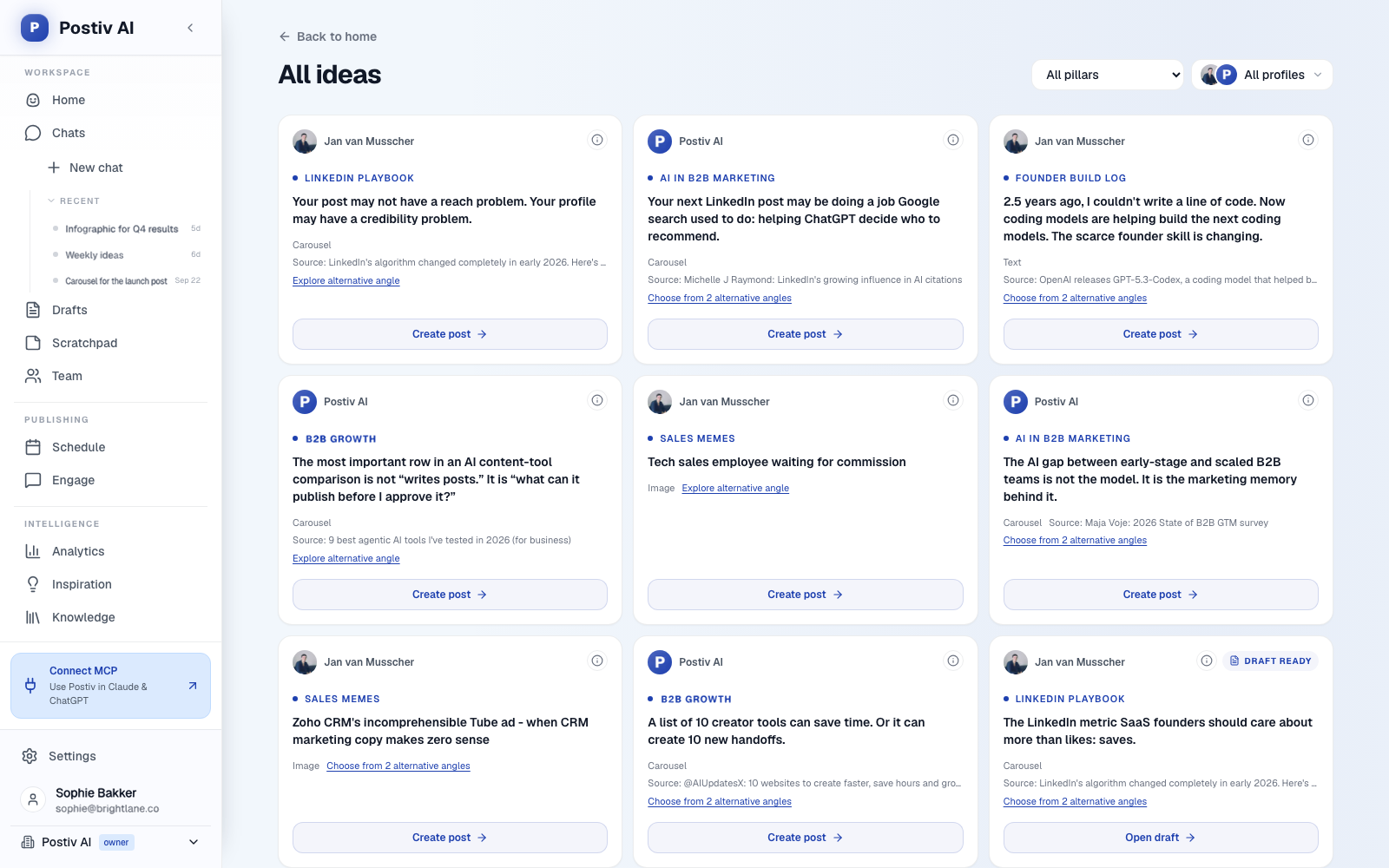
This is where AI-powered tools can be a massive time-saver. Using Postiv AI, for instance, you can brainstorm ideas, get help drafting the text for each slide, and then instantly design an on-brand carousel from a professional template. This can literally save you hours compared to starting from a blank canvas.
This workflow is all about turning raw executive insights into content that truly connects.
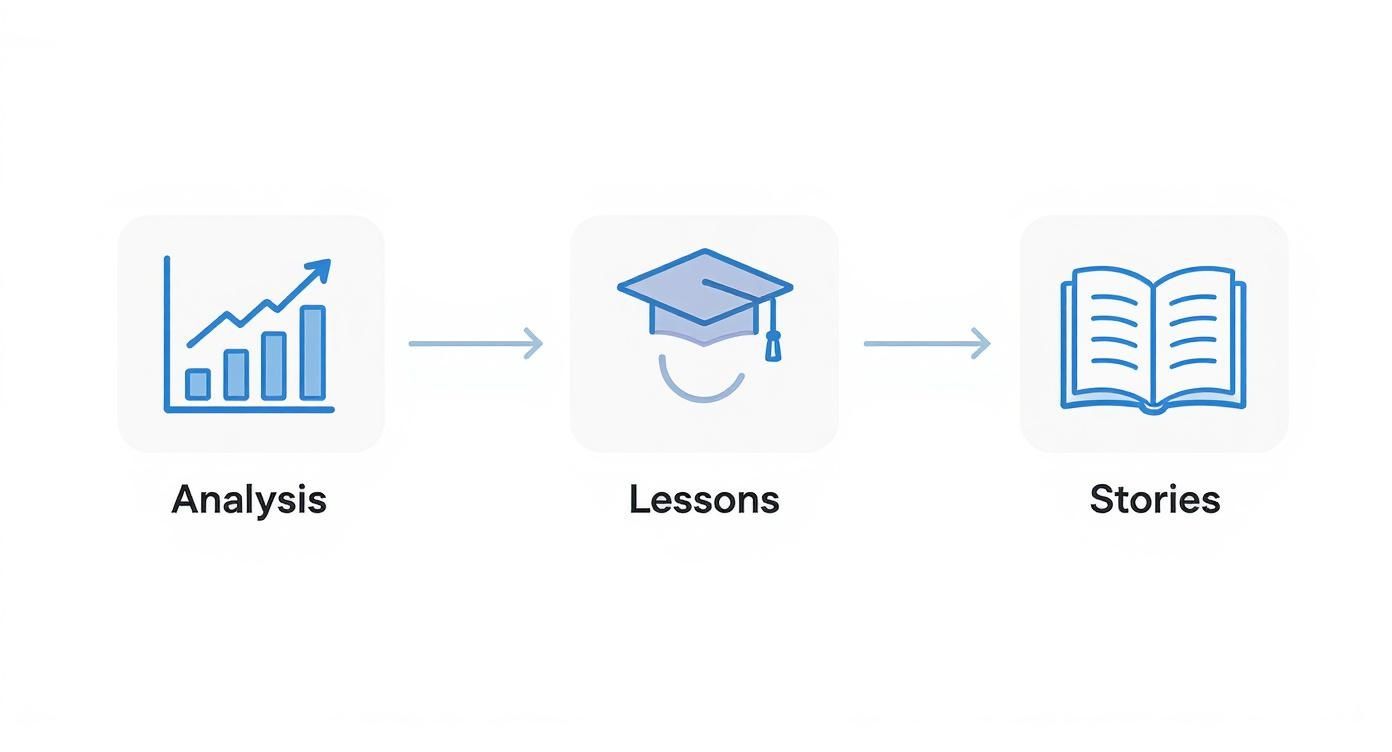
You can see the flow here: you start with analysis, draw out the key lessons, and then wrap them in stories that resonate with your audience.
Choosing the Right LinkedIn Content Format
Deciding which format to use can feel overwhelming, but it's simpler when you align the format with your goal. This table breaks down the strengths of each common post type.
| Format | Best For | Engagement Potential | Creation Effort |
|---|---|---|---|
| Text-Only | Sharing quick insights, asking questions, and starting conversations. | Medium | Low |
| Carousel | Educating your audience, breaking down complex topics, and storytelling. | High | Medium |
| Image/Graphic | Highlighting a key stat, sharing a quote, or adding visual context. | Medium | Low to Medium |
| Video | Building personal connection, sharing behind-the-scenes content, and demos. | Very High | High |
| Poll | Gathering quick feedback, sparking debate, and understanding your audience. | High | Low |
Ultimately, the best strategy is a mix. A steady drumbeat of text posts, punctuated by a high-value carousel and a personal video, creates a dynamic and engaging feed.
Using Video and Polls to Spark Interaction
When you need to drive direct engagement, video and polls are your go-to formats.
Video, even a simple 60-second clip shot on your phone, adds a human element that text just can't match. It lets your audience actually see and hear you, building connection and trust far more quickly. Our guide on how to post a video to LinkedIn has some great tips for getting the most out of it.
Polls are hands-down the easiest way to start a conversation. They require almost no effort for your audience to participate in, and the results can give you valuable insight into their challenges and opinions. Use them to test an idea, get a read on an industry trend, or simply ask a fun, relatable question. Done right, these engagement drivers are also a key part of learning how to generate leads on LinkedIn.
Creating Your Visual Identity
Consistency is the name of the game. Your visual assets are crucial for building a strong personal brand, making your profile instantly recognizable and conveying a sense of professionalism.
You really only need to nail three core assets:
- A Professional Headshot: It needs to be clear, high-resolution, and approachable. This is not the place for a cropped photo from your last vacation.
- A Strategic Banner Image: Don’t waste this prime real estate! Use it to state your core value proposition, showcase your company, or feature a call-to-action.
- Branded Post Templates: Create a few simple, clean templates for things like quotes, carousels, or announcements. Sticking to consistent fonts and colors builds brand recall over time.
Together, these elements create a polished and authoritative digital presence. They send a clear signal that you are intentional and strategic, reinforcing the credibility you're working so hard to build with your content.
Building a Sustainable Rhythm for Posting and Engagement
A great strategy is worthless if it just sits on a hard drive. When it comes to personal branding, consistency is the engine that turns smart content into real influence. For any busy executive, the real bottleneck isn't a lack of good ideas—it's the lack of a sustainable system to get them out there. Building a brand is a marathon, not a sprint, and it requires a realistic rhythm.
This is where so many executives get tripped up. They'll start with a huge burst of energy, posting and engaging like crazy, only for it to all go quiet the second a tough quarter hits. The answer isn't about finding more hours in the day. It’s about building a repeatable, low-effort workflow that actually fits the calendar you already live by.
Find Your Realistic Posting Cadence
So, how often should you be posting? The answer is probably simpler than you think: post as often as you can consistently. Three solid posts a week, every single week, is infinitely more powerful than posting daily for two weeks and then vanishing for a month.
For most executives, aiming for two to four high-quality posts per week is the sweet spot. It's a manageable goal that keeps you top-of-mind with your network without risking burnout.
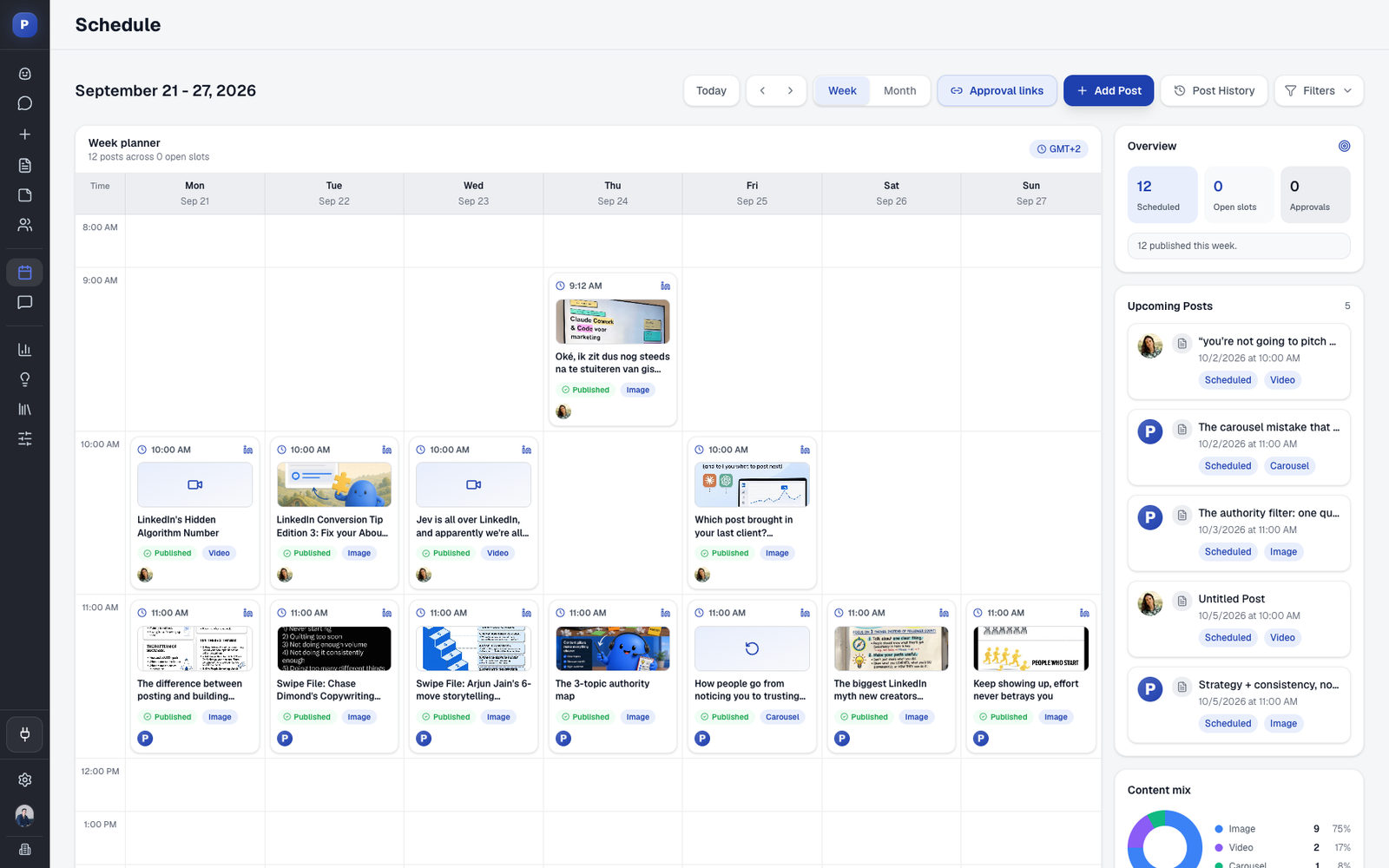
The only way to make this happen is to block it out on your calendar. Seriously, treat it like any other critical meeting. An hour on a Sunday night or a Friday afternoon is often all you need to plan, draft, and schedule everything for the week ahead. This "batching" method is so much more efficient than staring at a blank screen trying to come up with something brilliant every single morning.
The Power of the 15-Minute Daily Engagement Habit
Posting is just one side of the coin; engagement is what makes your brand come alive. This doesn't mean you need to spend hours doom-scrolling. It’s about a focused, 15-minute daily commitment to strategic interaction.
Here’s what that looks like in the real world:
- Check Your Notifications (5 minutes): Get in there and respond to comments on your own posts. This is non-negotiable. It shows people you're actually listening and value their time.
- Engage with Your Network (5 minutes): Scroll your feed and drop three to five thoughtful comments on posts from key contacts, industry peers, or potential clients. Go beyond "great post!"—add a unique perspective or ask a smart question.
- Connect and Converse (5 minutes): Answer your DMs and send out a few personalized connection requests. A simple, genuine note makes all the difference.
This small habit, practiced daily, compounds like crazy. It builds real relationships and keeps your profile visible and active in your network's feeds.
An executive's voice carries incredible weight. The data shows that personal posts from CEOs can drive 2 to 3 times more engagement than corporate brand posts on LinkedIn, proving that people connect with authentic stories. Still, while 87% of executive committee members are on LinkedIn, only 55% of FTSE 100 CEOs post regularly. That's a massive missed opportunity. Learn more about the emerging personal branding trends professionals need to know.
Creating a Team Workflow That Actually Works
The good news is, you don't have to do it all yourself. Bringing in your marketing team, an executive assistant, or an agency can be a game-changer, but only if the process is seamless and protects your authentic voice. The key is to have crystal-clear roles.
A workflow that we've seen succeed time and again looks something like this:
- You (The Executive): Your job is to provide the raw material—the core ideas, quick voice notes, or rough-and-tumble drafts. Your unique insights and stories are the one thing that can't be outsourced.
- Your Team/Assistant: They take your raw ideas and polish them into well-crafted posts, design the visuals (like carousels), and manage the content calendar using a tool like Postiv AI. Many busy executives skip the assistant entirely and use an AI LinkedIn ghostwriter that learns their voice from existing posts, then drafts new content in seconds.
- Final Approval: You always have the final sign-off before anything goes live. A simple shared Google Doc or a platform with built-in approvals keeps this step fast and organized.
This kind of system lets you scale your content production without ever losing that authentic touch. It’s a fundamental part of building a strong personal brand as an executive, especially when you’re balancing the need for influence with immense professional demands. If you’re evaluating which tool fits best into this kind of workflow, our comparison of the best Taplio alternatives breaks down pricing, AI quality, and team features across 10 platforms.
Answering Your Top Questions About Executive Branding
Stepping into the world of personal branding can feel like taking on a second job, especially when your calendar is already packed. It’s completely normal to have questions and even a few doubts. Let’s tackle some of the most common concerns I hear from executives, so we can move past the uncertainty and get you on a clear path forward.
Many leaders I work with share the same initial hesitation. They absolutely see the value, but they’re worried about the time commitment or potential missteps. The good news? With a smart, systematic approach, building an influential personal brand is far more manageable than it looks from the outside.
"How Much Time Do I Really Need to Invest Each Week?"
This is always the first question, and the answer is usually less than people expect. You don't need to spend endless hours glued to your screen to build an effective personal brand. For a busy executive, a sustainable, high-impact routine typically shakes out to about two to three hours per week.
Here’s how that time breaks down efficiently:
- Content Creation (1.5 - 2 hours): Find one block of time each week to batch-create your posts. This is your power hour (or two). Brainstorm ideas, draft the copy, and get everything scheduled in one focused session.
- Daily Engagement (15-20 minutes): This is the secret sauce. Spend just a few minutes each day responding to comments and engaging with what others in your network are posting. This small daily habit is what builds powerful momentum.
Consistency beats intensity every time. The goal is to find a rhythm you can actually stick with for the long haul—that’s how you get real, meaningful results in personal branding for executives.
"What If I’m Not a Natural Writer or Comfortable on Camera?"
Great news: you don’t have to be a professional creator to build a powerful brand. In fact, authenticity almost always resonates more than slick, overly polished content. The trick is to play to your strengths instead of trying to force a style that doesn't feel like you.
If writing isn't your favorite thing, stick to short-form text posts that share a single, powerful idea or ask a thought-provoking question. You can also work with someone on your team or use a tool like Postiv AI to help polish your raw thoughts into clear, concise posts.
And for anyone who is camera-shy? You never have to record a single video to succeed on LinkedIn. Lean into formats that let your expertise do the talking without ever showing your face:
- Text-based carousels that teach a core concept
- Insightful polls that spark a good conversation
- Sharing and adding your unique commentary on relevant industry articles
Your expertise is the real asset here, not your production skills. Just pick the formats that let your knowledge shine through most comfortably.
"How Do I Balance My Personal Brand with Our Company’s Brand?"
Think of your personal brand as a powerful amplifier for your company's brand, not a competitor. When you get this right, they work together beautifully. Your personal credibility builds a layer of human trust that a corporate logo simply can't.
The key is to make sure your core content pillars align directly with your company's mission, values, and strategic goals. Frame your insights through your unique leadership lens from within the organization. Doing this humanizes the corporate message and forges a much deeper connection with customers, partners, and potential new hires.
A successful executive brand doesn't just represent an individual; it provides an authentic, human window into the company's culture and vision. It’s a bridge between corporate messaging and genuine connection.
Of course, it's smart to establish clear guidelines with your communications or marketing team. Define which topics are on-brand, create a lightweight review process if needed, and make sure everyone is clear on what information is confidential. This alignment ensures you can build your presence with confidence and full support.
Ready to turn your executive insights into authority-building content without the time drain? Postiv AI provides the tools you need—from a brand-trained AI writer to a fast carousel designer and smart scheduling—to build your personal brand in minutes, not hours. Start your free trial today and see how easy it can be.