Forget the buzzwords for a moment. Social selling is simply the art of using social media platforms like LinkedIn to find the right prospects, build real relationships, and, ultimately, achieve your sales goals.
It's a complete pivot away from old-school, interruptive tactics. Instead of cold calls, you're having warm, value-driven conversations that turn online connections into genuine business opportunities. Think of it as being a trusted advisor, not just another salesperson sending a generic pitch.
What Is Social Selling Really?

Let's cut right to it. At its heart, social selling is about building relationships before you ever ask for the sale. It’s a fundamental shift from a transactional mindset to a relational one.
Imagine you’re at an industry conference. You wouldn't just walk in, start throwing business cards at everyone, and immediately launch into your pitch, right? Of course not. You'd find the right people, listen to what they're struggling with, and offer helpful insights. That's exactly what social selling is—you're just doing it on a digital platform.
Moving Beyond the Pitch
The old sales playbook was all about volume and interruption. It was a game of endless cold calls, generic email blasts, and pushy pitches. Social selling flips that entire model on its head by prioritizing authenticity and value.
Instead of interrupting a prospect's day, you become a valuable part of it. How? By sharing relevant articles, commenting thoughtfully on their posts, and engaging in meaningful discussions. You’re establishing yourself as a credible, go-to resource in your field.
When a prospect finally has a need, you’re the first person they think of because you’ve already laid a foundation of trust. It’s a long game, focusing on nurturing connections over time.
"Social selling is not a shortcut to a quick sale. It's a strategic investment in building a network of trust that pays dividends in the form of qualified leads and loyal customers."
And the data doesn't lie. Professionals with high Social Selling Index (SSI) scores generate 45% more sales opportunities than their peers with low scores. What’s more, social sellers often see a 2× higher ROI compared to traditional cold outreach. Building trust through insightful content simply helps you close deals faster. You can discover more LinkedIn statistics to see how this impacts sales success.
Social Selling vs Traditional Selling At a Glance
To really understand the difference, it helps to put the old and new methods side-by-side. The contrast in approach, goals, and even how success is measured is night and day.
This table breaks down the fundamental shift in thinking.
| Aspect | Traditional Selling | Social Selling |
|---|---|---|
| Primary Goal | Close the deal quickly. | Build a trusted relationship. |
| Approach | Interruption-based (cold calls, emails). | Permission-based (engaging content). |
| Focus | Product features and benefits. | Prospect challenges and solutions. |
| Communication | One-to-many, scripted pitches. | One-to-one, authentic conversations. |
| Timeline | Short-term, transactional. | Long-term, relational. |
| Key Metric | Number of calls/emails sent. | Quality of engagement and network. |
As you can see, traditional selling is a numbers game centered on the seller's immediate needs. Social selling, on the other hand, is a value game focused squarely on the buyer's long-term success.
How Social Selling Differs From Social Media Marketing
It’s easy to see why social selling and social media marketing get lumped together. After all, they both happen on social media. But confusing them is like mistaking a Super Bowl ad for a one-on-one meeting with a CEO. They serve fundamentally different purposes and are driven by entirely different teams.
Think of social media marketing as a broadcast from a stage. The marketing team is using a megaphone to send a message to a massive audience. Their goal is broad: build brand awareness, generate demand, and cast a wide net to capture as many potential leads as possible.
This is a one-to-many strategy, focused on company-level content that attracts followers, pushes people to the website, and generally fills the top of the sales funnel. It is not, however, designed for building personal relationships with individual buyers.
The Megaphone vs. The Conversation
Social selling, on the other hand, is the personal conversation happening in the audience, not the announcement from the stage. This is a one-to-one or one-to-few strategy, carried out by sales professionals themselves.
The goal here is incredibly specific: build genuine, trusted relationships with key decision-makers inside target accounts. While marketing uses that megaphone to reach thousands, a social seller uses targeted dialogue to solve specific problems for a handful of high-value prospects. This approach is all about turning personal credibility into closed deals.
A key takeaway is that marketing owns the brand's social presence, while individual sellers own their personal professional brand. One builds the company's authority, and the other builds individual trust.
This distinction is crucial for getting your teams aligned. Marketing’s efforts create the air cover—the brand credibility and awareness—that makes it so much easier for a salesperson to start a meaningful conversation.
Key Functional Differences
To really hammer home the difference, let's break down their core functions, goals, and metrics. Understanding where each practice shines helps ensure they work together to actually grow your business.
-
Who Executes It?
- Social Media Marketing: Primarily the marketing department or a dedicated social media team.
- Social Selling: Individual sales representatives, account executives, and business development reps.
-
Primary Objective:
- Social Media Marketing: Brand awareness, audience growth, and lead generation at scale.
- Social Selling: Nurturing relationships, building personal credibility, and converting specific prospects into customers.
-
Communication Style:
- Social Media Marketing: One-to-many. Think company posts, ads, and broad-reaching campaigns.
- Social Selling: One-to-one. This is all about personalized DMs, thoughtful comments, and sharing tailored content.
A Symbiotic Relationship
Ultimately, social selling and social media marketing aren’t competing; they are two sides of the same coin. When done right, they create a powerful, symbiotic relationship. An engaging brand presence from marketing makes prospects far more receptive to a seller’s outreach.
At the same time, the insights gathered by sales reps during their one-on-one conversations are pure gold for marketing. This feedback loop helps refine messaging, create more relevant content, and sharpen the overall strategy. The most successful organizations get this: marketing warms up the audience, and sales builds the deep connections that actually drive revenue.
Why LinkedIn Is Your B2B Social Selling Powerhouse
While you can technically practice social selling on any platform, one stands head and shoulders above the rest for B2B. LinkedIn isn't just another social network; it's a dynamic ecosystem built specifically for professional networking, knowledge sharing, and business growth.
Think about the user's mindset. On other platforms, people are looking for entertainment or updates from friends. On LinkedIn, they arrive with a professional agenda. Decision-makers aren't just killing time—they're actively hunting for industry insights, checking out potential partners, and searching for solutions to real business problems.
A Platform Built for Professional Intent
The very DNA of LinkedIn makes it the perfect environment for social selling to take root. Every feature, from detailed profiles to niche industry groups, is designed to spark meaningful business conversations. You’re not interrupting someone’s vacation photos with a sales pitch; you're joining a professional conversation they already want to be part of.
This context is a game-changer. When you share a compelling case study or a sharp piece of analysis, it lands exactly where people expect and want to see it. Your value-added content isn't seen as an annoying interruption—it's a welcome contribution.
The power of LinkedIn lies in its alignment of user intent and professional context. Buyers are there to find solutions, and sellers are there to provide them, creating a uniquely fertile ground for building high-value business relationships.
This professional focus is why LinkedIn completely dominates B2B lead generation. It's responsible for a staggering 75–85% of all B2B leads that come from social media, crushing other platforms in both lead quality and conversion rates.
Tools Designed for Targeted Engagement
Beyond the professional atmosphere, LinkedIn offers a suite of powerful tools that modern sales pros simply can't ignore. Its advanced search filters, especially inside Sales Navigator, let you pinpoint your ideal prospects with incredible accuracy. You can filter by industry, company size, specific job titles, and more.
This turns prospecting from a shot in the dark into a precise, strategic exercise. You can identify key stakeholders, watch for company news that creates sales opportunities, and build curated lists of high-value accounts. It means you can focus your energy where it will actually make a difference.
- Advanced Search: Zero in on decision-makers with specific criteria so you’re talking to the right people from day one.
- Content Sharing: Build your reputation as an expert by publishing articles, sharing relevant industry news, and joining important discussions.
- Professional Groups: Participate in niche communities to understand your prospects' pain points and contribute helpful advice.
Of course, sometimes you need to take the conversation offline. While LinkedIn is fantastic for making the initial connection, you may also want to know how to find someone's email from LinkedIn programmatically for more direct follow-up. The combination of its professional audience and purpose-built tools makes mastering the platform a must for any B2B professional serious about building a predictable sales pipeline.
The Four Pillars of an Effective Social Selling Strategy
A solid social selling strategy isn’t about firing off random posts or sliding into DMs hoping for the best. It’s a disciplined, repeatable process built on four core pillars. Think of these as a roadmap, closely mirroring what LinkedIn itself uses for its Social Selling Index (SSI), for turning your online activity into real business.
Mastering these four pillars is what separates the pros from the amateurs. Each one builds on the last, creating a powerful cycle of branding, prospecting, engaging, and relationship-building that ultimately fills your pipeline.
Let's break them down, one by one.
Pillar 1: Establish Your Professional Brand
Your LinkedIn profile isn't just a digital resume anymore—it's your storefront. And for social selling, your audience isn't recruiters; it's your ideal clients. The goal is to build a personal brand through a customer-centric profile that instantly tells people what problems you solve and what value you bring to the table.
This is about more than just listing your job duties. Your headline needs to be a compelling value proposition, and a free LinkedIn headline generator can help you sharpen it fast. Your "About" section should tell a story of how you help people succeed. Your featured content? That's your chance to show, not just tell, with case studies, articles, and glowing client testimonials.
Your professional brand is the foundation of social selling. It works for you 24/7, building credibility and attracting high-quality prospects even when you're not actively prospecting.
A few common mistakes I see all the time: a generic headline, a blurry or unprofessional photo, or a completely blank "About" section. Your profile needs to immediately answer a prospect’s unspoken question: "What's in it for me?"
Pillar 2: Find the Right People
Once your storefront is in order, it's time to find your customers. This is where the precision of social selling really shines. Instead of casting a wide, inefficient net, you can use LinkedIn's powerful search tools to zero in on the exact decision-makers you need to talk to.
Tools like LinkedIn Sales Navigator are absolute game-changers here. They let you filter potential customers by industry, company size, seniority, and even recent job changes. See the full Sales Navigator cost guide to compare plans and find the best price per seat. This strategic approach means you're investing your time where it counts—on conversations that have a genuine chance of going somewhere.
Effective prospecting boils down to a few key activities:
- Defining Your Ideal Customer Profile (ICP): Get razor-sharp on the titles, industries, and company details of your absolute best customers.
- Building Targeted Lead Lists: Use advanced search filters to create curated lists of high-potential people and companies.
- Watching for Trigger Events: Keep an eye out for signals like promotions, funding announcements, or new hires. These are perfect conversation starters.
Focusing your efforts like this shifts you from random outreach to an intelligent, targeted prospecting strategy. If you really want to go deep on this, our guide on how to generate leads from LinkedIn covers some more advanced techniques.
Pillar 3: Engage with Insights
Connecting with someone is just the first step. The real work happens in the third pillar: engagement. This is where you build the trust and credibility you need to earn a real conversation. And no, this isn't about sending a sales pitch the second they accept your request. It’s about becoming a recognized, valuable voice in your industry.
Mastering social media engagement strategies is non-negotiable here. It’s how you build rapport. This really comes down to two things:
- Sharing Valuable Content: Find and share articles, reports, and news that are genuinely useful to your target audience. But don't just hit "share"—add your own two cents to show you know what you're talking about.
- Joining Conversations: The real magic is in the comments section. Leaving thoughtful comments on your prospects' posts shows you’re paying attention and positions you as a peer, not just another salesperson.
The entire point is to give value before you ever ask for anything. This consistent, helpful presence keeps you top-of-mind, so when a need finally arises, you're the first person they think to call.
Pillar 4: Build Trusted Relationships
The final pillar is where it all comes together. It’s about taking the trust you've carefully built and turning it into a real business conversation—all without being pushy or jumping the gun.
This is all about personalized, one-on-one outreach. After you've liked and commented on a prospect's content for a while, you can send a connection request with a personal note that references a shared interest or a recent post of theirs. Once you're connected, keep the value-driven conversation going in their direct messages.
The key is to always be relevant. The goal isn't to book a demo in your first message. It's to understand their world, learn their challenges, and offer insights that actually help. By focusing on helping, not selling, you create a natural path to a discovery call where you can finally explore how you can make their life easier.
Your Five-Step Framework for Social Selling Success
Knowing the theory is one thing, but actually doing it every day is what separates the top performers from everyone else. Turning social selling into a habit that drives real results isn't about grand gestures; it's about following a clear, repeatable process.
This five-step framework breaks it all down, helping you build unstoppable momentum. It's built directly on the four pillars we've discussed: building your brand, finding the right people, engaging with insights, and nurturing relationships.
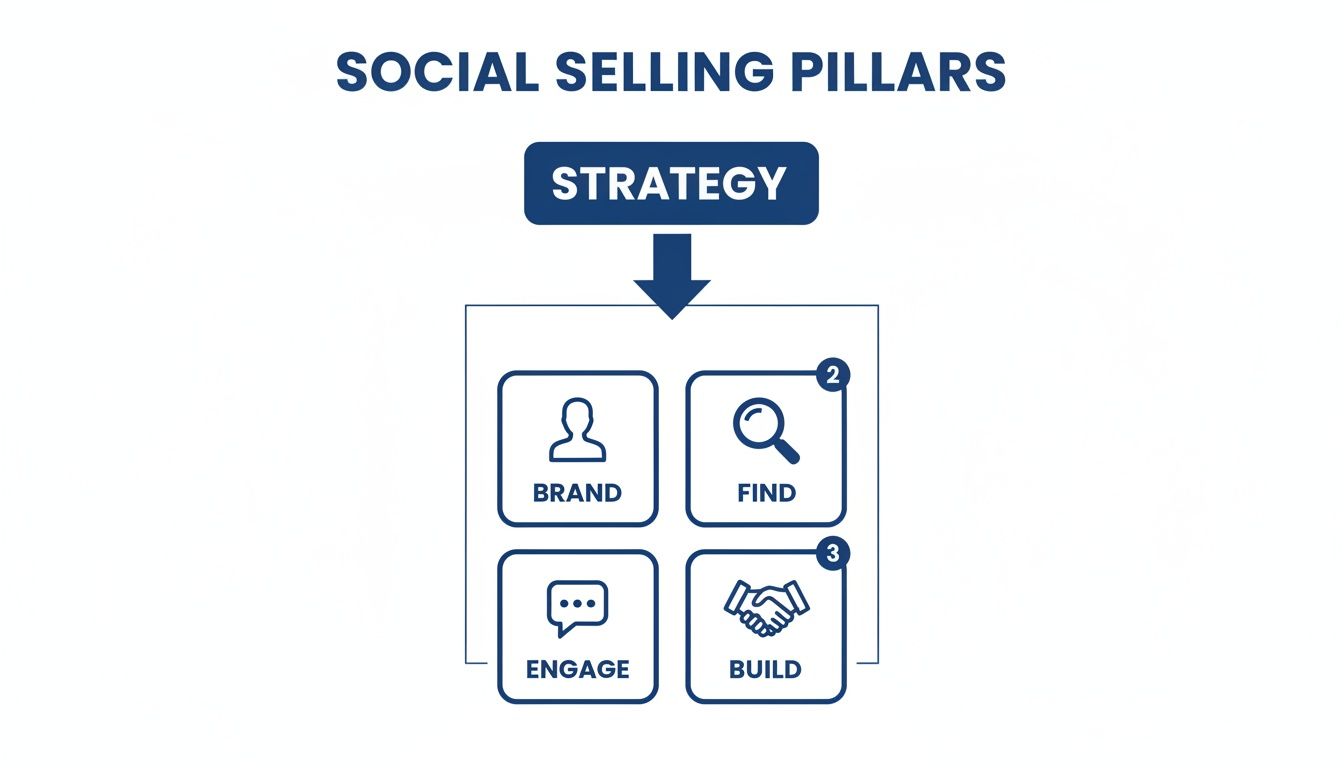
Think of it like this: your strategy is the blueprint, and these four actions—Brand, Find, Engage, and Build—are the foundational work you do every single day. Let’s get to it.
Step 1: Define Your Ideal Customer Profile
Before you can find the right people, you have to know exactly who you're looking for. A vague target just leads to wasted time and effort. The first move is always to create a crystal-clear Ideal Customer Profile (ICP).
An ICP isn't just a company in a certain industry. It’s a detailed sketch of your perfect customer. Go beyond the basics like revenue or employee count. What specific headaches are they dealing with that your product solves? What software are they already using? What are their big-picture business goals for the next 12 months?
Getting this level of clarity is like giving yourself a compass. It guides every single thing you do next, from how you write your LinkedIn profile to the articles you decide to share. Don't rush this step—it’s the foundation for everything else.
Step 2: Optimize Your LinkedIn Profile for Buyers
Okay, you know who you’re looking for. Now, it's time to turn your LinkedIn profile from a dusty old resume into a must-read resource for that ideal buyer. Your profile needs to speak directly to their problems and ambitions, instantly framing you as a credible expert who gets it.
Here’s a quick checklist to get your profile tuned up:
- A Professional Headshot: Get a high-quality photo where you look friendly and professional. No wedding photos, no cropped vacation pics.
- A Value-Driven Headline: Ditch the generic job title. Instead, frame your headline around how you help your ICP. "Account Executive" is boring. "Helping B2B SaaS Founders Cut Customer Churn by 20%" is a conversation starter.
- A Compelling "About" Section: This is your mini-sales page. Start with your buyer's problem, then weave a story about how you help them reach a better future. Use their language, not corporate jargon.
- A "Featured" Section That Shines: Pin your best stuff here. We're talking case studies, insightful articles you've written, video testimonials, or links to valuable company webinars.
When a prospect lands on your profile, you want them to think, "Finally, someone who understands my world."
Step 3: Develop Your Content and Engagement Rhythm
Consistency is the engine of social selling. It's how you build trust and stay on your prospects' radar. You don't need to go viral every day, but you do need to show up regularly with valuable insights. The key is finding a sustainable rhythm.
Start by curating great content that your ICP would actually find useful. Share industry reports, insightful news, or thought-provoking articles. But here's the trick: never just drop a link. Always add your own two cents. Your perspective is what adds the real value and showcases your expertise. Putting this into a structured plan is a game-changer; learning how to create a content calendar will keep you organized and on track.
Engaging with others is just as crucial. Set aside time every day to leave thoughtful comments on posts from your key prospects and industry leaders. A meaningful comment that pushes the conversation forward is often more powerful than a post of your own.
Step 4: Execute Your Daily and Weekly Routine
Even the best strategies are worthless without consistent action. The secret is to break down your social selling goals into small, manageable tasks you can do every day. This turns an overwhelming idea into a simple checklist.
A winning social selling routine isn't about spending hours glued to LinkedIn. It's about spending 15-30 focused minutes each day on the right, high-impact activities.
Building a simple, repeatable routine is the best way to guarantee you're hitting all the right notes. Here's a sample schedule to show you how easy it can be to get started.
Your Weekly Social Selling Action Plan
| Day | Key Activity | Time Commitment |
|---|---|---|
| Monday | Find 5 new prospects from your ICP. Send personalized connection requests referencing a shared interest or post. | 15 minutes |
| Tuesday | Share one piece of curated content with your unique perspective. Comment on 3 posts from prospects. | 15 minutes |
| Wednesday | Engage with people who reacted to your post. Follow up on any pending connection requests. | 10 minutes |
| Thursday | Share an original insight or a company success story. Comment on 3 posts from industry leaders. | 20 minutes |
| Friday | Review your week's activity and identify 1-2 prospects to move to a DM conversation. | 10 minutes |
This kind of structure builds muscle memory, ensuring the critical actions that drive results get done without fail.
Step 5: Measure What Matters
Finally, you can't improve what you don't measure. You need to track the right metrics to know what’s working and what’s not. Forget vanity stats like how many followers you have. Focus on the numbers that actually tie back to business goals.
Here are the key metrics you should be tracking:
- Profile Views: Is your content and engagement bringing the right people to your page? A steady increase is a great sign.
- Connection Acceptance Rate: A high rate (over 30%) means your personalization is hitting the mark.
- Engagement on Your Posts: Pay attention to comments and shares. This tells you what topics truly resonate with your audience.
- Conversations Started in DMs: This is where the magic happens. How many online interactions are turning into real conversations?
- Meetings Booked from Social: This is the ultimate bottom line. How many discovery calls or demos came directly from your LinkedIn activity?
By keeping an eye on these numbers, you can stop guessing. You can double down on what works, tweak what doesn't, and consistently improve your performance over time.
Common Questions About Social Selling
Even with a clear plan, it's natural to have a few questions before you jump in. Most people get hung up on the same practical concerns, so let's tackle them head-on and clear up any doubts that might be holding you back.
How Much Time Should I Spend on Social Selling?
This is easily the biggest question I get. The good news? You don't need to live on LinkedIn to see results. Social selling is all about consistent, focused effort, not just logging hours.
-
When you're starting out: Aim for just 15-20 minutes a day. Seriously, that's it. Use that time to drop thoughtful comments on a few key prospects' posts and share one valuable piece of content. The goal here is to build a habit you can actually stick with.
-
Once you've found your rhythm: You can bump that up to 30-45 minutes a day. This gives you more breathing room to proactively find new people, have deeper conversations, and follow up with leads in your DMs.
Remember, quality always beats quantity. A focused 20-minute session where you make genuine connections is far more powerful than an hour of mindless scrolling.
Will This Work for My Industry?
It's easy to look at the SaaS and marketing worlds and think social selling is only for them. But the truth is, the principles work almost anywhere, especially in B2B.
Social selling works wherever complex buying decisions are made. If your sales process relies on building credibility and solving nuanced problems, it can be a powerful tool for your industry.
Think about it this way: the strategy is tied to your buyer's journey, not your industry. If your ideal customers are professionals using platforms like LinkedIn to research solutions and network with peers, you have a golden opportunity to meet them where they are. You can even get a sense of your potential impact by understanding your Social Selling Index score.
What Are the Biggest Mistakes to Avoid?
Knowing what not to do is just as important as knowing what to do. Here are the most common traps people fall into when they first start out.
-
Pitching Too Early: This is the cardinal sin of social selling. Sending a sales pitch in your connection request or first message is the fastest way to get ignored and marked as a spammer. It completely undermines any trust you hope to build.
-
Being Inconsistent: Showing up once a month or engaging randomly just won't cut it. You need to be a consistent presence to stay top-of-mind and build the credibility that makes people want to talk to you.
-
Sharing Generic Content: Just hitting "repost" on your company's latest blog post adds zero value. People follow you for your perspective. Add your own insights, ask a question, or share a personal story—that's what builds your personal brand and makes you stand out.
Ready to turn your ideas into authority-building LinkedIn content in minutes? Postiv AI combines a brand-trained AI writer, a carousel designer, and a precision editor with scheduling and analytics to help you create posts that convert without the creative block. Start your free trial today.