
Most SEO professionals know how to get clients on LinkedIn in theory. The reality looks different. You send connection requests, craft cold DMs, maybe get a few polite responses, and almost nobody converts. It feels like shouting into a void where everyone else is also shouting.
The problem is not LinkedIn itself. The platform has over 1 billion members, and business owners actively use it to find service providers. The problem is the approach. Cold outreach puts you in competition with every other agency flooding inboxes with "I noticed your site could use some SEO work" messages.
There is a better way to get SEO clients on LinkedIn, and it starts with flipping the script entirely. Instead of chasing prospects, you create content that makes them come to you.
Why Content Beats Cold Outreach for SEO Agencies
Think about how your ideal client behaves on LinkedIn. A marketing director at a mid-size SaaS company opens the app during lunch. They scroll through their feed, stop on a post about a real SEO case study, read how someone took a site from 2,000 to 45,000 monthly organic visits, and think: "I need that for our site."
That is the moment where deals begin. Not in a cold DM. Not in a connection request with a pitch attached. In the feed, where trust is built before a single conversation happens.
Content-first client acquisition works for SEO professionals specifically because of three factors:
- You sell expertise. SEO is complex and hard to evaluate. Prospects cannot tell if you are good until they see evidence. Content is that evidence.
- The buying cycle is long. Most companies take weeks or months to choose an SEO partner. Content keeps you visible throughout that entire consideration period.
- Trust is everything. Businesses are spending significant monthly retainers on SEO. They want to feel confident they are hiring someone who genuinely understands the craft.
Cold outreach skips all of this. It asks someone to trust you based on a paragraph in their inbox. Content earns that trust over time, post by post, insight by insight.
Setting Up Your LinkedIn Profile to Convert Visitors
Before you publish a single post, your profile needs to do one job well: convince visitors that you are the right person to handle their SEO. When your content performs well and people click through to your profile, you have about five seconds to make an impression.
The Headline Formula
Your headline is not your job title. It is a value proposition. Compare these two approaches:
- Weak: "Founder & CEO at BrightRank SEO Agency"
- Strong: "I help B2B companies double their organic traffic in 12 months | SEO Strategy for SaaS & Professional Services"
The second version tells a prospect exactly what outcome they can expect and who you serve. It answers the two questions every buyer has: "Can this person help me?" and "Do they understand my industry?"
The About Section
Write your About section like a landing page, not a resume. Structure it in this order:
- The problem you solve -- Start with the pain your ideal client feels. "Most B2B companies invest in content but never see it rank. They publish blog posts that get zero organic traffic, and SEO feels like a black box."
- Your approach -- Explain how you work differently. Be specific. "We build SEO programs around commercial keywords that actually drive pipeline, not just traffic numbers that look good in reports."
- Proof -- Mention 2-3 results without naming clients if needed. "Last year, our clients averaged 3.2x organic traffic growth and a 47% increase in demo requests from organic search."
- The call to action -- Tell them what to do next. "If you want to talk about what SEO could do for your pipeline, send me a message or book a call at [link]."
The Featured Section
Pin your three strongest pieces of content to your Featured section. This could be a case study post that went viral, a carousel breaking down your SEO process, or a link to a detailed guide on your website. Think of these as your portfolio -- the first thing a prospect evaluates.
The Content Strategy That Attracts SEO Clients
Posting randomly about SEO will not get you clients. You need a deliberate content strategy built around what your ideal buyers care about and the questions they are already asking.
The Four Content Pillars
Build your posting calendar around these four categories:
1. Case Studies and Results
This is your most powerful content type. Nothing builds credibility faster than showing real outcomes. Structure each case study post like this:
- The starting situation (traffic, rankings, revenue from organic)
- The specific strategy you implemented
- The results after a defined time period
- One key takeaway the reader can apply themselves
You do not need to name the client. "A B2B SaaS company in the project management space" works perfectly well. What matters is that the numbers are real and the strategy is specific.
2. Industry Insights and Analysis
Position yourself as someone who understands where SEO is heading, not just where it has been. Post about:
- Algorithm update analyses with your interpretation of what changed and why
- Emerging trends like AI-driven search behavior and how it affects content strategy
- Data from your own client work that reveals broader patterns
- Your take on widely shared SEO advice that you disagree with (contrarian takes perform exceptionally well)
3. Tactical How-To Content
Share genuinely useful SEO advice that your ideal client can understand even if they are not an SEO expert themselves. Topics like:
- How to evaluate whether your current SEO agency is performing well
- The difference between keywords that drive traffic and keywords that drive revenue
- What a good SEO audit should actually include
- How to tell if your site has a technical SEO problem
This content works because it helps prospects become smarter buyers -- and smarter buyers tend to choose the person who educated them.
4. Behind-the-Scenes and Process Content
Pull back the curtain on how your agency actually operates. Show your process for keyword research, how you structure a content brief, or how you prioritize technical fixes. This type of content does two things: it demonstrates competence, and it helps prospects understand what working with you would look like.
Posting Frequency and Consistency
The single biggest factor in getting SEO clients on LinkedIn is consistency. Posting once a week will not build enough momentum. Aim for 3-5 posts per week, mixing the four content pillars throughout.
Here is a sample weekly schedule:
| Day | Content Type | Example Topic |
|---|---|---|
| Monday | Case Study | "How we grew organic leads 4x for a fintech startup" |
| Tuesday | Tactical Tip | "Three technical SEO issues that silently kill your rankings" |
| Wednesday | Industry Insight | "What Google's latest update means for B2B content" |
| Thursday | Behind-the-Scenes | "How I build keyword strategies for new clients" |
| Friday | Contrarian Take | "Why most SEO audits are a waste of money" |
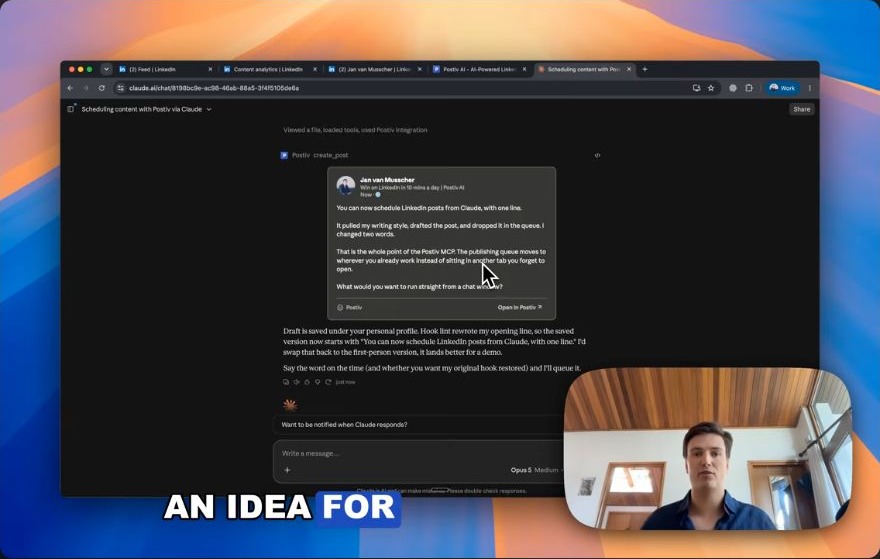
Keeping this pace consistently is challenging, especially when you are also running client work. This is where tools like Postiv become valuable -- they help you plan and create LinkedIn content at a sustainable rhythm so you never go silent during your busiest weeks.
Writing Posts That Drive Engagement and Attract Prospects
A great LinkedIn post is not about being clever or going viral. It is about making the right person stop scrolling, read to the end, and think: "This person knows what they are doing."
The Hook
Your first two lines determine whether anyone reads the rest. Strong hooks for SEO content follow a few proven patterns:
- The result hook: "We took a client from page 5 to position 1 for their most competitive keyword in 4 months. Here is exactly how."
- The contrarian hook: "Most SEO agencies focus on the wrong metrics. Traffic means nothing if it does not convert."
- The question hook: "How do you know if your SEO agency is actually delivering results? Here are 5 things to check."
- The story hook: "Last week, a prospect showed me the SEO report their current agency sends. I almost choked."
Avoid generic hooks like "SEO is important for every business" or "Did you know that 93% of online experiences begin with a search engine?" These are too broad to grab a specific audience.
Post Structure
Long-form text posts consistently perform well on LinkedIn for B2B content. Structure your posts with:
- Short paragraphs -- One to three sentences maximum. Dense blocks of text get skipped on mobile.
- White space -- Use line breaks generously. They make your post scannable and easier to read.
- A clear throughline -- Every post should have one central idea. Do not try to cover three topics in a single post.
- A specific ending -- End with a question that invites discussion, a clear takeaway, or a soft call to action. "If you want to see how we approach keyword research for B2B, drop a comment and I will send you our framework."
Formats That Work
Mix up your content formats to keep your feed fresh and reach different audience segments:
- Text posts -- Best for stories, insights, and contrarian takes. Aim for 800-1,500 characters.
- Carousels -- Excellent for step-by-step processes and frameworks. "10-slide breakdown of our SEO audit process" performs much better than a text post explaining the same thing.
- Polls -- Use sparingly, but they drive engagement. "What is the biggest SEO challenge your company faces?" gives you market research and visibility simultaneously.
- Document posts -- Share a one-page cheat sheet or checklist. These get saved and shared frequently.
Building a Lead Generation Engine on LinkedIn
Content gets you visibility. But visibility alone does not close deals. You need a system that turns engaged followers into conversations and conversations into clients.
The Engagement Funnel
Think of your LinkedIn presence as a three-layer funnel:
Layer 1: Awareness (Your Posts)
Your posts reach people who have never heard of you. The goal at this stage is simple: make them notice you and follow you or connect. Every post is an opportunity to enter someone's awareness for the first time.
Layer 2: Consideration (Ongoing Content + Engagement)
People who follow you see your posts regularly. Over weeks and months, they build a mental model of your expertise. This is where trust forms. They start to associate your name with SEO knowledge.
Layer 3: Conversion (DMs and Calls)
When a follower has a need -- their current agency disappoints them, they get budget approval for SEO, or they launch a new product -- you are already top of mind. They reach out to you, or they are very receptive when you reach out to them.
The key difference from cold outreach: by the time a conversation starts, the prospect already believes you are competent. The sales conversation focuses on fit and specifics rather than proving yourself.
Warm Outreach Done Right
Content-first does not mean you never reach out to anyone. It means when you do, the conversation is warm. Here is how to do it without being pushy:
- Engage first. Comment on their posts thoughtfully for a few weeks before sending a message. Add genuine value in your comments, not just "Great post!"
- Reference something specific. "I saw your post about expanding into the European market. We have worked with three SaaS companies on international SEO for exactly that kind of expansion."
- Offer value before asking for anything. "I put together a quick analysis of your site's organic visibility in the EU markets you mentioned. Happy to share it if that would be useful."
- Make the ask low-commitment. "Would a 20-minute call make sense to see if there is a fit?" is far better than "Can I send you a proposal?"
Tracking What Works
Pay attention to which posts generate profile views, connection requests, and DMs. These are your leading indicators. Over time, you will notice patterns -- specific topics or formats that reliably attract your ideal clients.
Track these metrics monthly:
- Profile views (are they trending up?)
- Connection requests from your target audience
- DM conversations started by prospects
- Discovery call bookings that originated from LinkedIn
- Clients closed from LinkedIn-sourced leads
Scaling Your LinkedIn Content Operation
Once you have validated that LinkedIn content drives real pipeline for your SEO business, the next challenge is scaling it without burning out or sacrificing quality.
Build a Content Bank
Spend one session per month brainstorming and outlining 20-30 post ideas. Pull from:
- Client wins and milestones from the past month
- Questions prospects asked during sales calls
- Interesting data from your SEO tools
- Industry news and algorithm updates
- Lessons learned from mistakes or experiments
Having a backlog of ideas eliminates the "what should I post today" problem that kills consistency.
Repurpose Everything
One detailed case study can become:
- A long-form LinkedIn post telling the story
- A carousel breaking down the strategy step by step
- Three short tactical posts, each focused on one element of the strategy
- A comment thread answering follow-up questions
- A blog post on your website with more detail
You are not creating more work. You are extracting more value from work you have already done.
Systematize Your Workflow
The biggest reason SEO professionals stop posting on LinkedIn is that content creation feels like an extra job on top of client work. Systematize it:
- Batch creation -- Write a week of posts in one sitting rather than one post per day.
- Templates -- Build post templates for each content pillar so you are not starting from scratch every time.
- Scheduling -- Use a content tool like Postiv to schedule posts in advance. When you are deep in a client project, your LinkedIn presence stays active without daily effort.
Consistency over months is what separates SEO professionals who get a trickle of inbound leads from those who have a reliable stream of qualified prospects reaching out every week.
Common Mistakes to Avoid
After seeing hundreds of SEO professionals try LinkedIn, these are the patterns that hold people back:
Talking Only About Rankings
Your ideal client does not care about rankings. They care about revenue, leads, and growth. Frame everything in terms of business outcomes. "We moved this keyword from position 12 to position 3" is less compelling than "Organic demo requests increased 68% after we restructured their content strategy."
Being Too Technical
The person who hires you is often a CEO, VP of Marketing, or business owner. They do not need to understand canonical tags or crawl budgets. They need to understand what SEO will do for their business. Save the technical details for conversations with marketing managers who evaluate vendors on technical competence.
Inconsistency
Posting five times in one week and then going silent for a month is worse than posting twice a week every week. The LinkedIn algorithm rewards consistency, and your audience builds trust through repeated exposure. If you cannot commit to daily posting, commit to a lower frequency you can sustain indefinitely.
Selling Too Hard
Every post does not need a call to action to book a call. In fact, most of your posts should not have one. The goal is to build a body of work that speaks for itself. When someone scrolls through your last 30 posts and every single one demonstrates expertise, they will reach out without being asked.
Ignoring Comments
When someone comments on your post, they are handing you a warm lead indicator. Respond to every comment. Ask follow-up questions. Start real conversations. Some of the best client relationships begin in a comment thread.
Your 90-Day Action Plan
If you are starting from scratch, here is a practical timeline to get your first SEO client from LinkedIn:
Days 1-7: Foundation
- Rewrite your headline and About section using the framework above
- Update your Featured section with your best work
- Identify 50 ideal prospects and connect with them
Days 8-30: Build Momentum
- Post 3-4 times per week using the four content pillars
- Comment on 10-15 posts from your target audience daily
- Share your first case study post
Days 31-60: Establish Authority
- Increase posting to 4-5 times per week
- Publish a detailed carousel or document post breaking down your process
- Start warm outreach to engaged connections (people who like or comment on your posts)
Days 61-90: Convert
- Continue consistent posting and engagement
- Reach out to warm leads with personalized messages referencing their specific needs
- Offer free, high-value resources (site audits, keyword analyses) to start conversations
- Book discovery calls and track your conversion metrics
Most SEO professionals who follow this approach land their first LinkedIn-sourced client within 60-90 days. Some see results much faster, especially if they already have a strong portfolio of client results to share.
The Bottom Line
Getting SEO clients on LinkedIn is not about finding a magic outreach script or growth hack. It is about showing up consistently with content that proves you know what you are doing. Every post you publish is an investment in your pipeline. Every case study you share is a sales conversation you do not have to have. Every insight you offer builds the kind of trust that no cold message can replicate.
The SEO professionals who win on LinkedIn are not the ones with the fanciest websites or the biggest teams. They are the ones who show up in the feed, day after day, with genuine expertise and real results. Start there, stay consistent, and the clients will come to you.